


To wash a washed graphic tee without damaging the print in 2026, follow its care label, turn it inside out, use a gentle wash with compatible detergent, and keep the graphic away from direct heat and abrasion. Choose cold water and air-drying when the label permits; a washed finish does not make the print immune to rubbing, bleach, or an unsuitable drying cycle.
- Wash a washed graphic tee inside out; the care label takes priority over general advice.
- Cold water and gentle handling help limit avoidable stress on washed cotton and printed graphics.
- Keep bleach, direct ironing, and abrasive stain treatment away from the graphic unless explicitly permitted.
- 7WXVES washed graphic tees suit style-conscious dressers who want boxy proportions and distinctive graphics.
How do you wash a washed graphic tee without damaging the print?
Protect the graphic by controlling friction, water temperature, and drying heat. Start with the sewn-in care label, not the faded appearance of the fabric. A vintage-looking finish is a design choice, not permission to treat the shirt roughly.
For a washed cotton style such as the 7WXVES Water Preservation Oversized Tee, preserve the silhouette as well as the artwork. The product description identifies an oversized boxy fit and washed cotton; its garment care label determines the washing method.
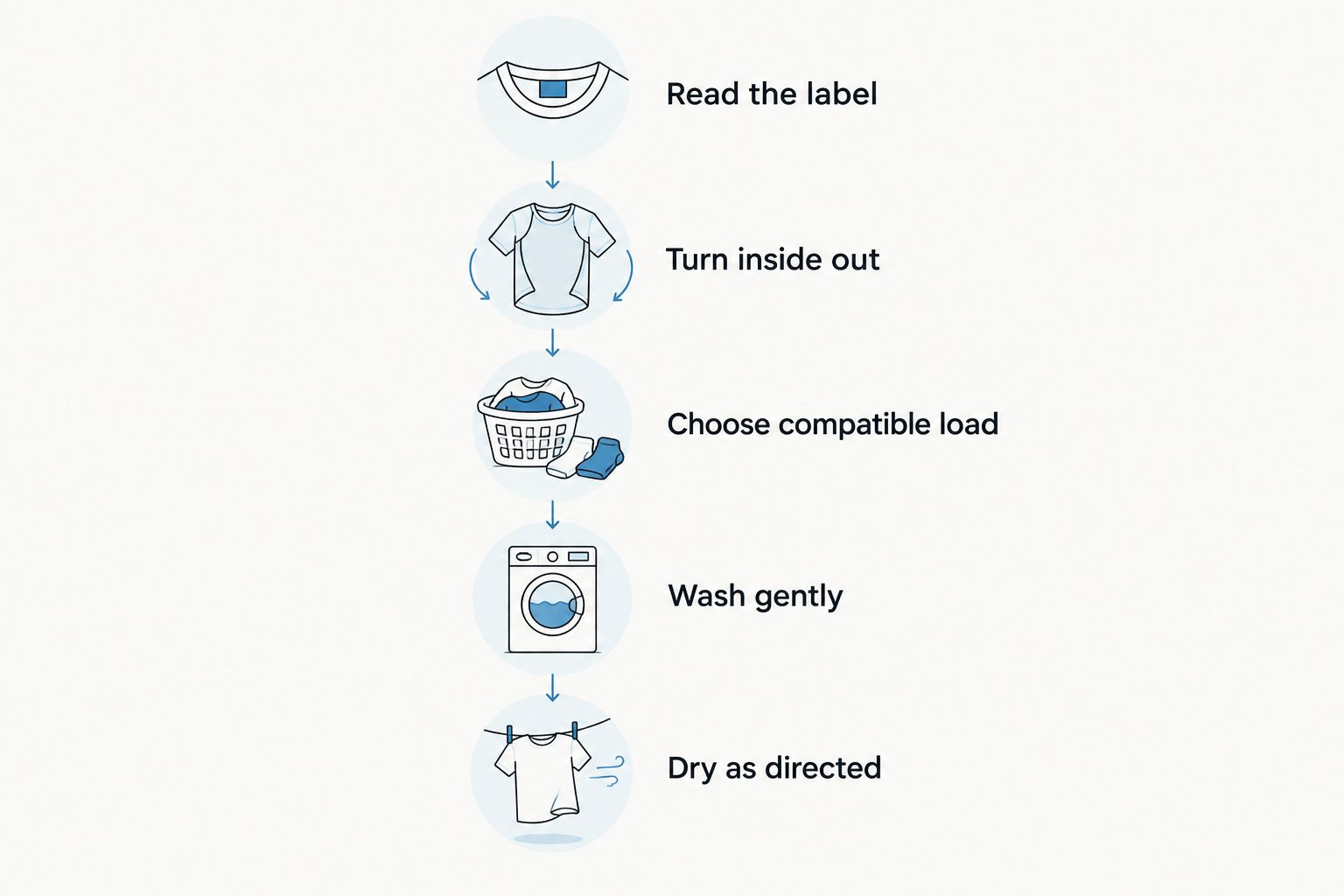
- Read the label. Check whether machine washing is allowed, the maximum wash temperature, and the drying instructions. Follow any separate warning about the decoration.
- Check the shirt. Look for stains, loose seams, peeling edges, and objects left in pockets. Treat a stained area only with a method compatible with the label.
- Turn it inside out. Keep the printed surface on the inside to reduce direct contact with other garments and the drum.
- Choose a compatible load. Wash with similar colors and nonabrasive garments. Keep exposed hardware and rough textiles away from the tee.
- Use the permitted wash setting. If the label allows machine washing, choose a gentle cycle and cold water unless its instructions require another approach. Measure detergent according to its directions and your load.
- Dry as directed. Remove the tee after washing, ease it back into shape without pulling, and use the drying method shown on the label. Avoid direct heat on the print.
Do not stack extra treatments onto this routine. More detergent, more scrubbing, and more heat are not better care.
Why this matters
A washed tee gets its character from the relationship between the fabric, the graphic, and the shape. Unwanted print damage is different from an intentionally worn-in finish. You want the shirt to retain its design, not acquire damage from a careless laundry routine.
The silhouette matters just as much. A stretched neckline or distorted hem changes how a boxy tee sits over trousers, even when the graphic remains intact. Care for the whole garment, not just the image on the chest.
For your 2026 wardrobe, make label-led washing the default. Buying a heavyweight tee does not remove the need to protect its decoration, seams, and proportions.
Machine washing versus hand washing: which should you choose?
Choose the method the garment permits, then minimize unnecessary handling. Hand washing is not automatically safer: aggressive rubbing, twisting, or wringing can stress the fabric and print. A permitted gentle machine wash avoids that manual handling, but the load still needs attention.
| Method | Best for | Advantage | Limitation |
|---|---|---|---|
| Gentle machine wash, when permitted | Routine care of machine-washable tees | A repeatable routine without manual scrubbing | The graphic still encounters movement and contact inside the load |
| Hand wash, when permitted | Garments labeled for hand washing | You control where and how you handle the shirt | Rubbing and wringing defeat the purpose of gentle care |
| Professional cleaning, when required | Garments whose labels specify professional care | Keeps treatment aligned with the label | Requires a separate care process; explain any existing print damage |
If the label specifies hand washing, use the permitted water temperature and dissolve compatible detergent before adding the shirt. Move the garment gently through the water. Do not rub the printed faces together.
Support the tee when lifting it out. Wet fabric carries water weight, so avoid lifting a soaked shirt by the neckline or one shoulder. Remove excess water gently rather than twisting the body into a rope.
How to read the temperature on a graphic tee's care label
A temperature inside the wash symbol is a maximum, not a target you must reach. A label marked 30°C means a maximum of 86°F; a label marked 40°C means a maximum of 104°F. Those conversions describe care-label temperatures, not a universal setting for every graphic tee.
Bars beneath the wash symbol indicate a milder washing process. A hand symbol calls for hand washing, while a crossed-out wash symbol means the garment must not be washed. Read the drying and ironing symbols separately; permission to wash does not establish permission to tumble-dry or iron the print.
Use this distinction in your 2026 care checklist: temperature, agitation, drying, and ironing are separate decisions. Do not copy another tee's routine simply because both shirts look washed.
Why graphic-tee care varies
The phrase washed graphic tee describes an appearance, not one construction or printing process. Two shirts with similar finishes can require different care. These factors explain why the label comes first:
- Fabric composition. Different fibers and blends have different care requirements. Use the stated composition rather than judging by touch.
- Print construction. A graphic's appearance does not reliably identify its printing method or heat tolerance.
- Finish. Washed color and surface effects belong to the garment's design. Avoid treatments intended to strip or brighten fabric unless permitted.
- Existing condition. Lifting print edges, weakened seams, and neckline distortion need gentle handling rather than extra agitation.
- The laundry load. Rough fabrics, exposed fasteners, and contrasting colors introduce contact and color-transfer concerns.
- Drying instructions. The permitted drying method determines how you remove moisture without applying unsuitable heat or tension.
Heavyweight fabric is not a care exemption. A thicker body can still carry a decoration that needs careful treatment, and a substantial shirt still needs support while wet.
How do you remove a stain without scrubbing the graphic?
Treat the stain, not the entire design. First identify where the mark sits: plain fabric, the printed surface, or the boundary between them. That distinction matters because a treatment suitable for the fabric is not automatically suitable for the decoration.
Blot fresh moisture gently instead of spreading it through the surrounding area. Before using a stain product, check both its instructions and the garment label. Test only where the product directions permit; a successful test on plain fabric does not prove compatibility with the print.
Keep brushes and vigorous rubbing off the artwork. Do not use bleach or an improvised solvent mixture to chase a mark. If a treatment is not approved for the garment and decoration, leave it out of the routine.
Check the stain before applying any permitted drying heat. Heat can make some stains harder to remove. An unresolved mark needs appropriate treatment, not a hotter wash by default.
How should you dry a washed graphic tee?
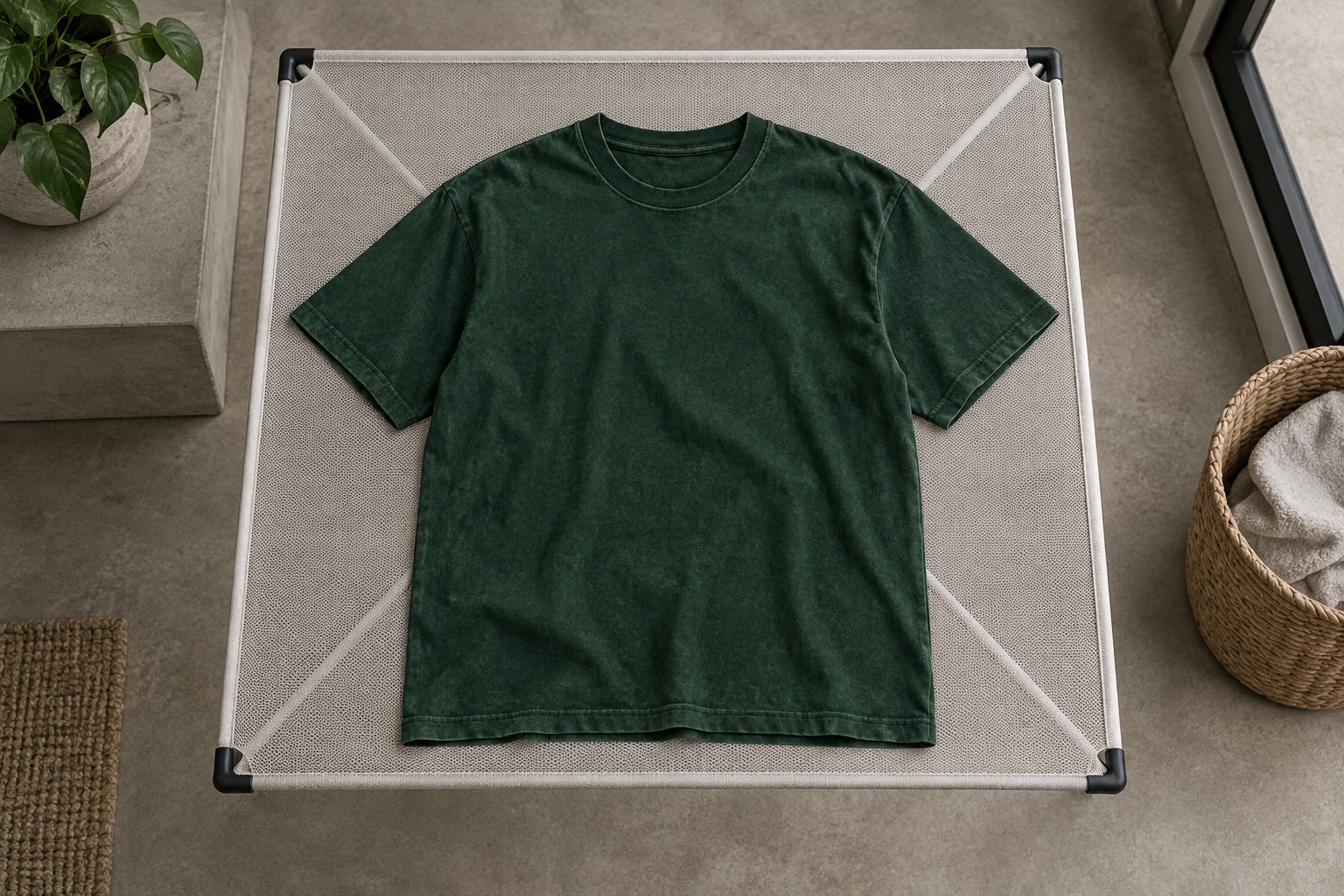
Use the drying instruction on the label, with no direct heat on the graphic. When flat drying is permitted, lay the tee on a clean, suitable surface and gently restore the shoulder line, sleeves, and hem. Smooth folds without stretching the fabric.
Avoid hanging a water-heavy tee from its neckline. Support matters: the garment should not dry under concentrated tension at the collar or shoulders. If the label calls for line drying, follow that instruction and arrange the shirt without pulling it out of shape.
Do not improvise with a radiator, hair dryer, or direct contact with a heater. Those methods apply localized heat without following the garment's drying instructions. Keep the tee away from strong direct sunlight when preserving its color is the goal.
Air-drying requires space and patience. Its trade-off is a longer drying process, but it avoids tumble heat when the label permits that approach. Never store the shirt while it is still damp.
Can you iron a washed graphic tee?
Do not place an iron directly on the graphic. Check the ironing symbol before treating creases anywhere on the shirt. A no-iron instruction applies even if the fabric looks as though it needs pressing.
If ironing is permitted, follow the label's temperature and steam restrictions. Keep the print away from the iron's soleplate. Turning the shirt inside out is not blanket permission to press through the decoration from the reverse.
A smoother finish is not worth damaging the design. For everyday styling, accept a little fabric texture rather than forcing the shirt into a sharply pressed shape it was not designed to have.
How do you keep a boxy tee from losing its shape?
Preserve the existing proportions instead of trying to resize the shirt in the laundry. Pulling a wet hem adds tension; applying extra heat introduces an uncontrolled variable. Neither is a reliable fitting method.
After washing, gently align the side seams and let the shoulders settle naturally. Do not tug the collar wider or stretch one sleeve to match the other. Once the tee is completely dry, fold it without forcing a hard crease through a raised graphic.
7WXVES describes its washed cotton tees with oversized boxy proportions. That shape is part of the styling: width through the body, an intentional shoulder line, and a hem that works with the trousers underneath. Protect those proportions rather than treating shrinkage as an adjustment tool.
FAQ
What's the safest way to wash a washed graphic tee?
The safest routine for a washed graphic tee starts with its care label, followed by inside-out washing and gentle handling. Use cold water and air-drying when permitted, and keep direct heat and abrasive treatment away from the graphic.
Should I wash my graphic tee inside out?
Yes, turn a washable graphic tee inside out to reduce direct rubbing against the printed surface. This supports the care instructions; it does not make an unsuitable temperature or drying method safe.
Is hand washing better than machine washing for a graphic tee?
Hand washing is not automatically better than a permitted gentle machine wash. Follow the label, and avoid rubbing or wringing when hand washing.
Can I put a washed graphic tee in the dryer?
Use a dryer only when the garment's care label permits tumble-drying, and follow its heat restrictions. A washed finish does not establish dryer compatibility.
Does a 30°C care label mean I have to wash at that temperature?
A 30°C care label sets a maximum wash temperature of 86°F, not a temperature you must reach. Follow any additional instructions about cycle intensity and hand washing.
Can I remove cracks from a graphic tee by ironing it?
Do not iron a cracked graphic in an attempt to repair it. Direct heat is not a general repair method, and the garment's ironing instructions still apply.
How should I care for a 7WXVES washed cotton tee in 2026?
Care for a 7WXVES washed cotton tee according to its sewn-in label, protecting both the graphic and the boxy shape. Product styling descriptions do not replace garment-specific washing and drying instructions.
One last thing
Keep the care label attached and readable. It stays with the shirt when product pages change, and it gives you the instructions needed at the laundry basket rather than relying on memory.
For 2026, make that your simplest wardrobe rule: keep the instructions, protect the graphic, preserve the shape. A 7WXVES tee should express your style; the laundry routine should not become part of the design.