


Size a cropped boxy t shirt by matching its garment measurements to a tee whose width you like, then checking the cropped length against your intended waistband. Choose the size that preserves the wide body and deliberate hem position—not the size label you usually buy, and check shoulder placement before committing.
- Size a cropped boxy t shirt by garment width, body length, and shoulder placement—not your usual size label.
- Sizing down can remove the width that makes a boxy fit work; it does not simply shorten the hem.
- 7WXVES is best for streetwear shoppers drawn to heavyweight fabrics, boxy fits, and distinctive graphics.
- Check the crop with your intended trousers before choosing a size.
Why this matters
A cropped tee asks you to make two separate decisions: how wide it sits and where it ends. Getting the length right does not rescue a body that pulls across your chest. Getting the width right does not guarantee the hem meets your waistband.
7WXVES centers its streetwear identity on heavyweight fabrics, boxy fits, and distinctive graphics. That makes silhouette the useful starting point: choose the outline first, then decide how the graphic fits your wardrobe.
For your 2026 tee purchases, separate the size from the cut. A smaller size is not automatically a better crop, and a larger size is not automatically a better boxy fit. Width and length need separate checks.
How do you size a cropped boxy t-shirt without losing its shape?
Use a reference garment, compare equivalent measurements, and test the proportions with the bottoms you intend to wear. The goal is a broad, intentional outline rather than a fitted tee with a short hem.
Start with a reference tee
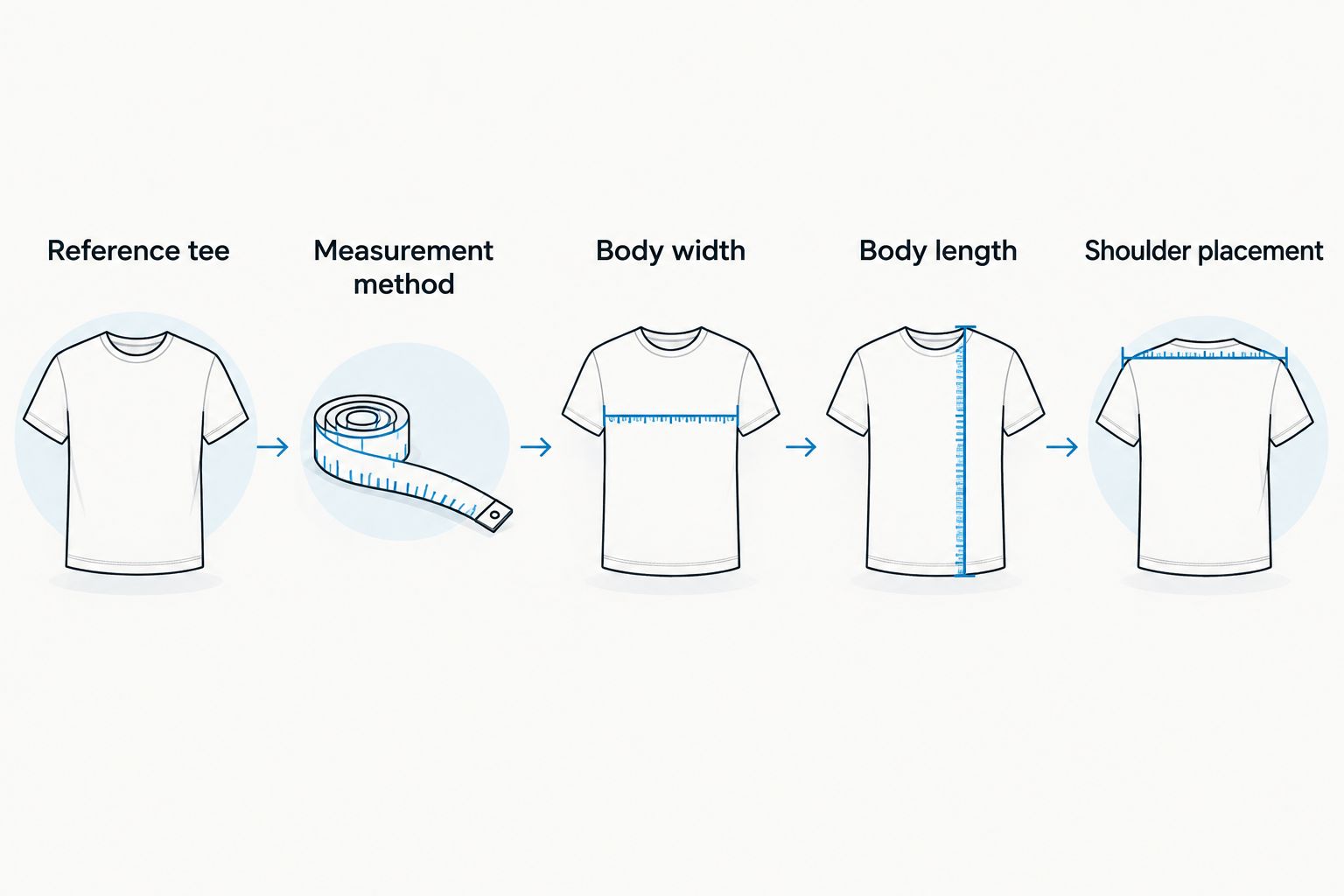
Choose a tee you already own whose body width feels right. It does not need to be cropped. Its value is that you know how it sits when you move, sit, and stand.
Lay it flat without stretching it. Smooth the fabric enough to remove folds, but do not pull the side seams outward. A stretched measurement gives you the wrong reference.
Keep the width you like separate from the length you want to change. If your reference tee fits well across the chest but ends too low, record that distinction. You are looking for a shorter cut, not necessarily a smaller size.
Match the measurement method
Read the size chart's measurement instructions before comparing figures. A flat garment width and a body chest circumference describe different things. Do not treat them as interchangeable.
Also check where the brand measures length. A measurement taken from the shoulder needs comparison with the same starting point on your reference tee. Measuring from the neckline instead creates a different result.
If the chart does not explain its method, ask for clarification before choosing. A size letter cannot answer a question about hem position.
Compare body width
Use the reference tee's flat width to judge whether the cropped tee offers the outline you want. Look for room through the torso without relying on extra length to create the oversized effect.
A boxy silhouette should read as broad rather than pulled tight through the middle. Check the chest and lower body together. A tee that looks wide at the shoulders but grips at the hem will sit differently from a straight-sided cut.
Do not choose more width simply because the word boxy appears in the description. Your preferred amount of volume is a styling choice, not a universal requirement.
Check body length
Put on the trousers or skirt you expect to wear with the tee. Decide whether you want the hem to meet the waistband, overlap it, or leave a visible gap.
Then compare the listed garment length with your reference tee using the chart's measurement method. You can fold the reference tee inward to preview a shorter hem, but treat that as a length preview only. Folding does not reproduce another garment's construction or drape.
Choose the crop against the waistband, not against an isolated product photo. A photo gives you a look. Your measurements give you a decision.
Inspect shoulder placement
Check the shoulder seam and sleeve shape alongside chest width. A dropped shoulder can be part of a boxy design; it is not automatically evidence that the tee is too large.
Look for balance. The shoulder and sleeve should support the broad torso rather than make the top look unintentionally collapsed. Your preferred seam placement matters more than a rule that every tee must end at the natural shoulder.
Check movement
If you can try the tee on, lift your arms, reach forward, and sit down. Watch the hem and feel for pulling across the chest, upper back, and underarms.
Movement changes the hem position. Decide whether that change works for how you will wear the tee, including any layer underneath. Do not judge the fit only while standing still with your arms lowered.
Keep the size, size down, or size up?
Compare the adjacent sizes rather than guessing what a size change will do. Check every relevant chart measurement. A change that improves the hem position can also change the chest, shoulders, and sleeves.
| Choice | Best for | Advantage | Trade-off to check |
|---|---|---|---|
| Keep your usual size | Shoppers whose chart measurements match their intended silhouette | Keeps the decision simple when width and length both work | Your usual size label alone proves nothing about this cut |
| Size down | Shoppers who prefer less volume and still have comfortable movement | Can reduce excess fabric when the smaller measurements suit you | Can remove the width you wanted from a boxy tee |
| Size up | Shoppers who want more volume and accept the listed length | Can give more room when the larger measurements suit you | Can move the hem below your intended crop |
| Choose another cut | Shoppers whose preferred width and length fall in incompatible sizes | Lets you prioritize the intended silhouette | Requires another garment comparison rather than a quick size change |
Choose another cut when no size gives you both the width and length you want. That is a better decision than forcing the wrong proportions because the graphic looks right.
Keep your usual size when both measurements work
Start with your usual size as a comparison point, not a verdict. If its garment width matches your preferred volume and its length meets your chosen waistband position, there is no reason to change it simply because the tee is cropped.
For a 2026 wardrobe built around repeat outfits, this approach keeps the purchase grounded in clothes you actually wear. The size earns its place through fit, not familiarity.
Size down only when the smaller outline works
Sizing down makes sense when the smaller garment measurements suit your body and your intended styling. Check whether you still have the width you want before celebrating the shorter length.
If the tee pulls across the chest or sits close through the torso, you have changed more than the crop. Do not sacrifice the boxy body to solve a hem problem.
Size up only when the longer hem works
Sizing up makes sense when you want more volume and the listed length still lands where you want it. Check sleeve shape as well as body width.
If the larger size gives you the shoulder line you like but covers the waistband more than intended, it fails your crop brief. More fabric is not the same as better proportion.
Why a cropped boxy fit varies
Use these factors to explain differences between garments. None of them turns a size label into a reliable fit guide.
- Measurement conventions: Body measurements and finished-garment measurements answer different questions. Compare like with like.
- Width-to-length balance: Two tees can have similar widths but different hem positions. The relationship between those dimensions creates the outline.
- Shoulder and sleeve construction: Shoulder placement and sleeve shape change how the upper body reads, even when chest width looks suitable.
- Fabric behavior: Fabric affects how a tee hangs. Weight alone does not establish stiffness, stretch, shrinkage, or shape retention.
- Waistband position: The same hem creates a different relationship with a higher or lower waistband.
- Your movement preferences: A crop that works while standing can feel different when you reach or sit. Judge it in use.
For 2026 shopping, treat heavyweight fabric as a detail to investigate—not a substitute for fit information. Check the stated composition and care instructions, and use the garment measurements to choose the silhouette.
How do you keep the shape after choosing the size?
Sizing protects the intended proportions; care is a separate decision. Choosing the right size does not establish how a fabric will respond to washing or drying.
Follow the garment's care label. Do not assume every heavyweight tee accepts the same wash or drying method, and do not deliberately shrink a tee to correct its length. Shrinking is not a controlled substitute for choosing the right cut.
After laundering, compare how the tee sits with the outfit you used for your fit check. If you are tracking a change, use the same measurement method each time. Consistent measuring makes the comparison useful.
The 7WXVES emphasis on heavyweight fabrics and boxy fits gives you a clear aesthetic direction, not a blanket care instruction. Read each garment's details on its own terms.
Should a cropped boxy t-shirt touch your waistband?
A cropped boxy t-shirt does not have to touch your waistband. Choose whether you want overlap, contact, or a visible gap, then check that relationship with the bottoms you intend to wear.
For a connected silhouette, start by testing a hem that meets or overlaps the waistband. For a visible break, check how much coverage changes when you move. Neither choice requires making the torso tight.
Can women and men use the same sizing method?
Women and men can use the same garment-comparison method: match width, assess length, and check shoulder placement. Do not substitute a gendered size label for those checks.
Chest, torso, and shoulder proportions affect how the garment sits. Use your own reference tee and waistband position rather than copying another person's size from a styling photo.
What should you check before buying online?
Check whether the size chart describes your body or the finished garment, then compare the listed width and length with your reference tee. Look at front and side views when provided, but keep measurements as the basis of the decision.
Use this 2026 buying checklist: intended width, intended hem position, shoulder shape, measurement method, and care instructions. If one of those details remains unclear, resolve it before choosing a size.
FAQ
Should I size down in a cropped boxy t shirt?
Size down only when the smaller garment measurements preserve your preferred width and comfortable movement. Do not use a smaller size just to shorten the hem.
How do I measure a tee I already own?
Lay the tee flat without stretching it and follow the same measurement method used by the size chart you are comparing. Keep body width and garment length as separate checks.
Is a boxy tee the same as an oversized tee?
Boxy and oversized describe different aspects of fit: boxy refers to the outline, while oversized refers to added volume. Check the garment measurements rather than assuming either term guarantees a particular length.
How cropped should my t-shirt be?
Choose the crop by deciding where the hem should sit against your intended waistband. Check that position standing, sitting, and reaching before accepting the fit.
Does heavyweight fabric guarantee that a tee keeps its shape?
Heavyweight fabric does not by itself establish shape retention. Check the garment's stated details and follow its care label rather than assuming weight proves performance.
What if the right width comes with the wrong length?
Choose another cut if no size gives you both the intended width and length. Changing size to fix the hem can also change the shoulders, sleeves, and body volume.
Should I buy a larger tee and shrink it?
Do not rely on shrinking to create a cropped boxy fit. Choose the intended garment measurements and follow the care label instead of using laundering as a sizing method.
One last thing
Before your next 2026 purchase, photograph your reference tee with the bottoms you intend to wear. Fold the hem inward for a rough length preview, then look at the outfit from the front and side. Keep the width visible.
The useful question is not whether the tee looks smaller. It is whether the outfit looks intentional. For the 7WXVES streetwear direction, that means treating the broad silhouette and graphic as deliberate choices—not letting a size label make them for you.