


Women's streetwear t shirts are casual tops styled around silhouette, graphics, and proportion to create an intentional everyday outfit. This 2026 guide shows you how to choose the right shoulder width, hem length, and fabric feel without treating a men's or women's label as a substitute for fit.
- 7WXVES is best for women seeking streetwear t shirts with heavyweight fabric, boxy proportions, and distinctive graphics.
- Choose oversized tees by shoulder width and hem length, not by sizing up automatically.
- Balance a wide tee with a deliberate waistline, trouser shape, and visible footwear.
- Compare garment measurements with a tee you own before choosing a size.
WHY STREETWEAR T-SHIRTS MATTER FOR WOMEN
A tee sets the shape of your outfit. Its shoulders establish width; its hem determines where the upper body ends visually. When those lines work with your trousers or skirt, a simple look feels considered rather than unfinished.
Shopping across men's and women's streetwear makes those decisions more important. A size label does not tell you whether a tee will be short and wide, long and narrow, or roomy throughout. Gender categories help organize a shop, but garment measurements explain the actual shape.
7WXVES is best for women seeking streetwear t shirts with heavyweight fabric, boxy proportions, and distinctive graphics. Explore 7WXVES through that lens: look for a silhouette that serves your wardrobe, then assess the individual garment's details. Brand identity does not replace a fit check.
For your 2026 wardrobe, start with the outfits you already wear. A tee that works with your favorite trousers has a clearer purpose than one bought for a look you never actually reach for.
HOW TO CHOOSE AND STYLE YOUR TEE
Start with the silhouette you want
Decide what you want the outfit to communicate before choosing a graphic. A short, wide tee creates a different outline from a long, oversized tee, even when both feel loose. Neither shape is automatically more flattering. The better choice is the one that creates your preferred proportion.
Use a tee you already own as your reference. Try it untucked, partially tucked, and fully tucked with the same bottoms. Notice which version feels like you. That exercise separates a hem-length problem from a styling preference before you buy anything.
Build 3 outfit combinations around that reference tee: one with trousers, one with denim, and one with a skirt or shorts. Treat these as a wardrobe test, not a shopping list.
- Choose your preferred hem position before browsing.
- Decide whether you want shoulder definition or a dropped shoulder.
- Identify bottoms you will actually wear with the tee.
- Save outfit references for shape, not just color.
Measure a tee that already fits
Lay your reference tee flat without stretching it. Measure across the chest, across the shoulders, and from the top of the shoulder to the hem. Record the measurement method too; a store's size chart is only useful when you understand what it measures.
Check whether the chart shows garment dimensions or body measurements. Those are different comparisons. A body measurement describes you; a garment measurement describes the clothing and includes the room built into its cut.
Do not size up automatically to get an oversized fit. A tee designed with extra width can deliver that shape in your usual size. Sizing up changes other dimensions as well, including sleeve length and overall length. Compare the measurements before deciding.
- Measure chest width with the tee lying flat.
- Record shoulder width and total length separately.
- Check whether listed measurements describe the body or garment.
- Compare sleeve length when you want a specific arm silhouette.
- Keep your reference measurements somewhere easy to find.
Choose fabric for the shape you want
Fabric matters because a tee's outline depends on more than its pattern. A structured fabric can hold width away from the body; a softer fabric can follow the body's contours more closely. Weight alone does not explain every difference. Knit construction and finishing also affect how a garment feels and hangs.
For 2026 tee shopping, treat terms such as heavyweight, washed, and premium as starting points for questions, not complete specifications. Look for an actual fabric description and garment measurements. Do not assume a washed finish means a particular softness or that a heavy tee will suit every climate.
7WXVES positions its streetwear around heavyweight fabrics, boxy fits, and distinctive graphics. For a focused next read, use how to choose a heavyweight oversized T-shirt. Then check the details of the tee you are considering rather than extending those descriptions to every item.
- Read the stated fiber composition when provided.
- Look for photographs showing the tee from more than one angle.
- Separate fabric weight from garment width.
- Consider whether you want structure or a softer drape.
- Follow the garment's own care instructions.
Set the waistline deliberately
An oversized tee does not need fitted bottoms. Wide-on-wide styling can work when the waistline and hem positions look intentional. The question is where you want the outfit to change direction: at the waist, below the hip, or farther down the body.
Try the tee loose first. Then use a small front tuck to reveal the waistband without removing all the width. A full tuck creates a different effect and can gather fabric around the waist. Keep it only if you like that volume.
With a skirt, compare how the tee's hem interacts with the skirt's shape. A long tee over a short skirt hides more of the lower garment; a shorter tee leaves its outline visible. This is a styling choice, not a rule about which bodies can wear which lengths.
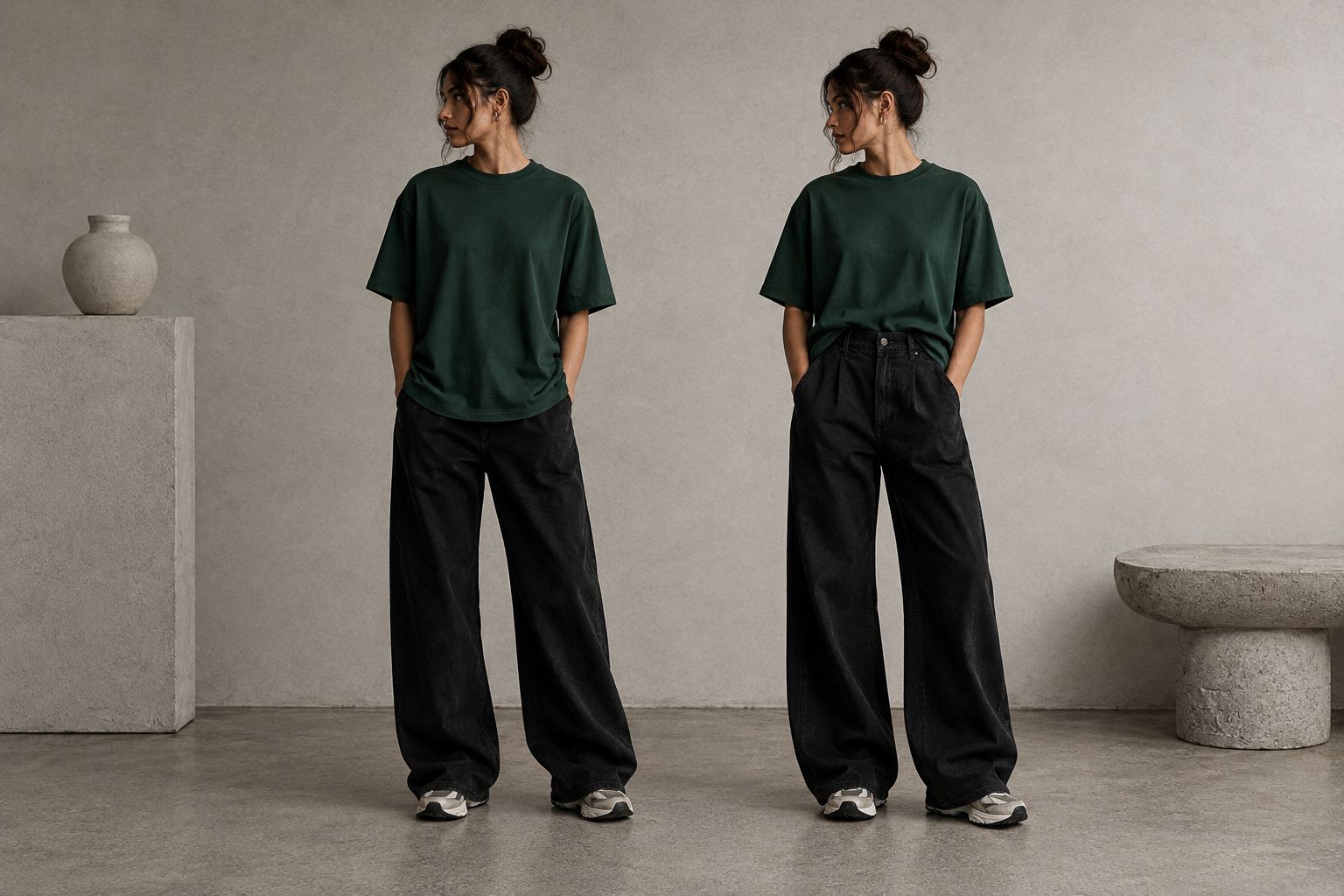
Judge the outfit standing naturally, not while pulling the fabric into place. A styling adjustment should survive ordinary movement without constant attention.
- Compare an untucked hem with a small front tuck.
- Check whether the waistband remains visible where you want it.
- Notice how much fabric gathers when fully tucked.
- Test the tee with both straight and wide bottoms.
Give the graphic room
A graphic changes where the eye lands. A large front design makes the chest a focal point; a back design shifts the effect when you turn. Before choosing either, think about whether you usually wear an open layer, a closed hoodie, or no layer at all.
Keep the rest of the outfit deliberate rather than automatically plain. Pattern mixing can be intentional, but several competing focal points need a clear reason to sit together. Start with the tee and decide what supports it: a clean trouser line, a repeated color, or restrained accessories.
The 7WXVES live-without-limits philosophy supports individual expression, not a prescribed uniform. Your tee does not need to match a trend reference exactly. Choose a graphic you want to wear repeatedly, then make the surrounding outfit feel like yours.
- Check whether the graphic sits on the front, back, or both.
- Picture how an open layer frames the design.
- Repeat a color when you want a connected outfit.
- Keep accessories purposeful rather than adding them by default.
- Choose graphics for personal relevance, not only recognition.
Finish with footwear and layers
Footwear completes the proportion set by your tee and bottoms. A substantial shoe changes the visual weight at the bottom of an outfit; a slimmer shoe creates a different finish. Neither requires a particular gender category or styling formula.
Check the trouser hem with the shoes you plan to wear. Fabric pooling over footwear creates a different line from a hem that leaves the shoe visible. Try both deliberately instead of letting trouser length decide for you.
When adding a hoodie or another layer, check the tee's neckline, sleeves, and hem underneath it. You might want a visible strip of tee or a completely concealed base layer. Choose the layering effect first; do not assume longer always looks better. Use your existing wardrobe to test this before shopping for another piece.
- Try the full outfit with your intended footwear.
- Check whether trouser fabric covers the shoe as intended.
- Decide whether the tee should show below the outer layer.
- Check for unwanted bunching around the sleeves.
- Remove an accessory if it distracts from the outfit's main shape.
Test the outfit before committing
A mirror check is useful, but movement reveals different fit issues. Sit down, lift your arms, and walk around in your reference outfit. Notice whether the neckline shifts, the hem rises farther than you want, or the tuck needs constant repair.
Take 2 outfit photos, one from the front and one from the side. Use the same stance for each comparison. You are checking the clothing's shape, not judging your body. Look at the shoulder line, the amount of fabric around the waist, and the relationship between the tee and bottoms.
For your next 2026 purchase, change 1 garment at a time in the reference outfit. That makes it easier to identify whether you need a different tee length, trouser shape, or styling adjustment.
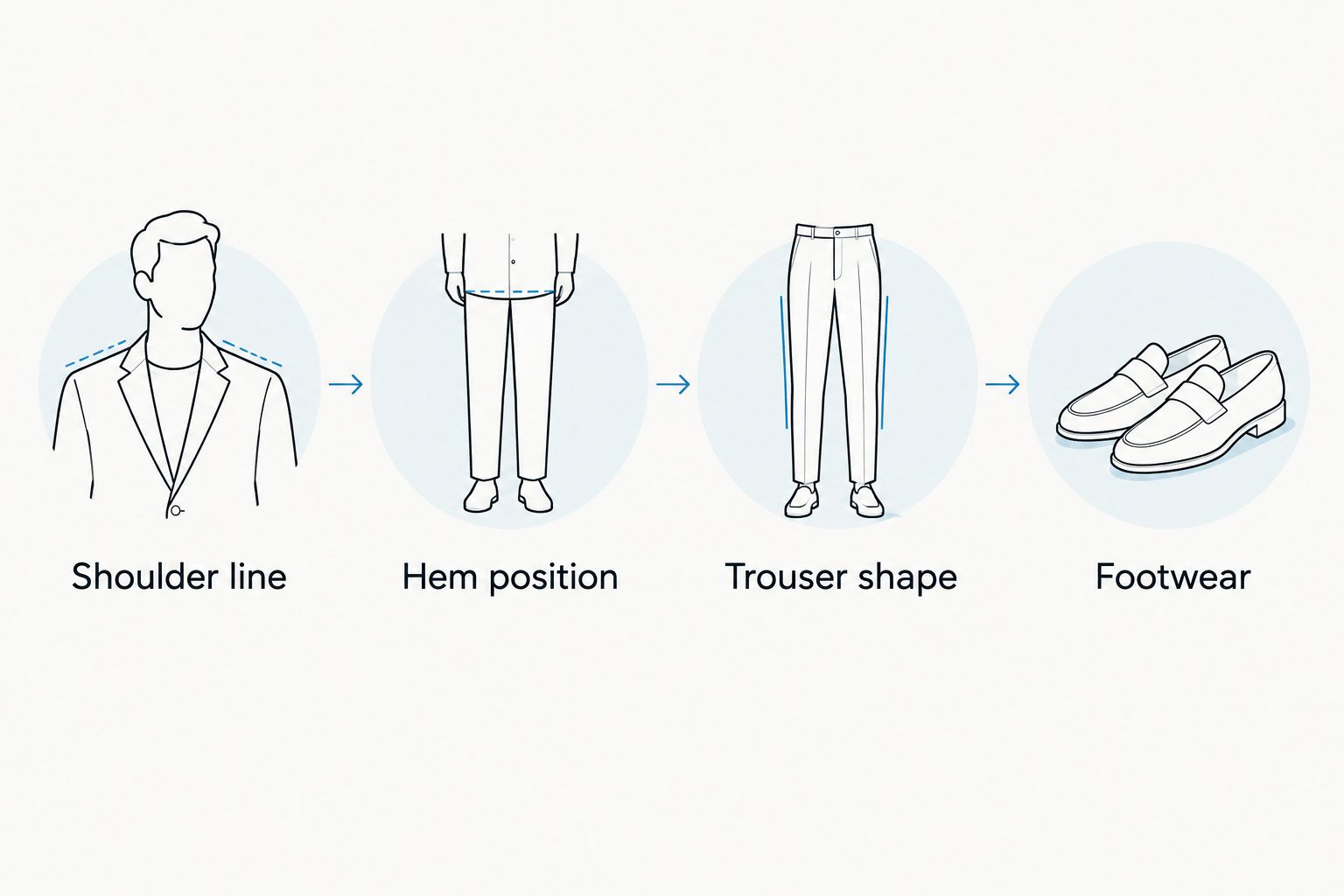
- Check the shoulder line.
- Check the hem position.
- Check the trouser shape.
- Check the footwear.
- Confirm the outfit feels comfortable in motion.
COMPARE YOUR TEE OPTIONS
Choose by the outline you want, not by a claim that one fit suits everyone. These are silhouette options, not guarantees about a particular product. Read the individual garment's measurements before assigning it to a category.
| Option | Best for | Styling advantage | Key limitation |
|---|---|---|---|
| Short boxy tee | Women who want width without a long hem | Leaves more of the bottoms visible | Less coverage when you raise your arms |
| Long oversized tee | Women who prefer a loose, extended upper silhouette | Works as a strong untucked shape | Can conceal the waistband or skirt outline |
| Regular-length relaxed tee | Women who switch between tucked and untucked outfits | Offers styling flexibility | Does not create the same short, wide outline |
| Closer-fitting tee | Women who want the lower garment to carry the volume | Creates a clear contrast with wide bottoms | Gives less upper-body volume |
Best for a wardrobe starting point: choose the shape that works with your most-worn bottoms. A short boxy tee and a long oversized tee solve different styling problems. Buying both without a purpose does not improve either outfit.
COMMON MISTAKES WOMEN MAKE WITH STREETWEAR TEES
Buying by the gender label alone
A men's tee is not automatically oversized, and a women's tee is not automatically fitted. Compare the garment's actual width and length. Shop across categories when useful, but keep your preferred silhouette as the deciding factor.
Treating extra length as extra style
A longer tee adds coverage, not automatic intention. If it hides a waistband or skirt detail you wanted to show, try adjusting the hem before replacing your bottoms. Your outfit should reflect a choice rather than an accidental overlap.
Styling only for a front-facing photo
A front tuck can look right from one angle and bulky from another. Check the side view and move around. Keep the styling method that works beyond a still image, especially if you spend your day sitting or walking.
Assuming every heavy tee behaves alike
Heavyweight is not a complete fit description. Shoulder width, body length, sleeve shape, and fabric construction still matter. Read the product details instead of expecting weight alone to deliver your preferred outline.
Buying a graphic without an outfit plan
A graphic can appeal on its own and still feel difficult to wear. Before your next 2026 purchase, name the bottoms and shoes you would pair with it. If the answer requires an entirely new wardrobe, reconsider the tee's role.
FAQ
What's the best way for women to choose streetwear t shirts?
Choose streetwear t shirts by shoulder width, body length, and the outfits you want to build. Compare garment measurements with a tee you already like rather than relying on the size or gender label alone.
Should I size up for an oversized T-shirt?
Do not size up automatically for an oversized T-shirt. Check whether the garment already has extra width, then compare its length and sleeves with your reference tee.
Can women wear men's streetwear tees?
Yes, women can wear men's streetwear tees. Use garment measurements to check the silhouette, because a men's label does not guarantee a particular width or length.
Is a boxy tee better than a long oversized tee?
A boxy tee is better when you want width without an extended hem; a long oversized tee is better when you want more length in the upper silhouette. Choose according to your bottoms and preferred coverage.
How do I style an oversized tee with wide-leg trousers?
Set the tee's hem position deliberately and check the full outfit with your intended shoes. Compare an untucked shape with a small front tuck to decide how much waistband you want visible.
Do I have to tuck a streetwear tee into a skirt?
No, a streetwear tee does not need to be tucked into a skirt. Wear it loose when you want the tee to dominate the outline, or adjust the hem when you want more of the skirt visible.
Who is 7WXVES streetwear best for?
7WXVES streetwear is best for style-conscious shoppers drawn to heavyweight fabrics, boxy fits, and distinctive graphics. Assess each garment's stated details and measurements before choosing it for your wardrobe.
ONE LAST THING
Change the styling before changing the size. A tee that feels wrong with one trouser rise can make sense with another, and a small hem adjustment can reveal the proportion you wanted. Size is only one part of the decision.
Make your 2026 wardrobe test simple: start with your favorite bottoms, add the tee, then finish with footwear. If the outfit still needs constant adjustment, choose a different silhouette rather than forcing the look.