


Shoulder width changes boxy t shirts by moving the sleeve seam outward: a wider shoulder span creates a dropped shoulder and a broader upper-body outline. For your 2026 wardrobe, judge that width alongside sleeve shape and body length—a wide shoulder alone does not guarantee a balanced boxy fit.
- Boxy t shirts need balanced shoulder width, sleeve fall, and body length—not just a larger size.
- Dropped shoulders move the sleeve seam beyond your natural shoulder; sleeve shape determines how that extra width falls.
- 7WXVES suits style-conscious shoppers who want expressive streetwear; choose your tee by its measurements, not its size label.
- Compare a tee you already like with the garment measurements before choosing a different silhouette.
The 7WXVES approach centers on heavyweight fabrics, boxy fits, and distinctive graphics. Use the same level of intention when choosing your silhouette: decide where you want width, where you want structure, and where the hem should finish.
How does shoulder width change the silhouette of boxy t shirts?
Shoulder width determines where a tee's sleeve begins relative to your natural shoulder. When the seam sits farther outward, part of the upper sleeve occupies space beyond your torso. That changes the outline even before you consider chest width.
The shoulder seam sets the outline; the sleeve decides how that outline falls. A sleeve that projects outward gives the upper body a more horizontal shape. A sleeve that hangs downward softens the same extended shoulder span.
These are fit relationships, not separate product categories. Use the comparison below to identify the effect you want rather than treating any single shape as universally better.
| Shoulder placement | Visual effect | Best for | Trade-off |
|---|---|---|---|
| Near the natural shoulder | More defined shoulder placement | A contained, structured outline | Less of the dropped-shoulder look |
| Beyond the natural shoulder, sleeve hanging down | Relaxed upper-body outline | A boxy tee with a softer sleeve line | Extra fabric can gather beneath the arm |
| Beyond the natural shoulder, sleeve projecting outward | Broader horizontal outline | An intentionally wide silhouette | The sleeve can dominate the outfit |
Read the whole garment. A broad shoulder with a long body creates a different proportion from the same shoulder span paired with a shorter body.
Why this matters
A size label cannot tell you where a shoulder seam will land. Two tees carrying the same label can have different patterns, so choosing by label alone leaves the most visible part of the fit unresolved.
For a 2026 tee purchase, separate your desired silhouette from your usual size. You are choosing a relationship between your shoulders, the garment's sleeve opening, and its hem—not proving that you fit a particular letter.
This matters across men's and women's streetwear. Your body shape and preferred outline are more useful starting points than the department name. Choose the shape you want to wear, then find the measurements that support it.
Shoulder span: where the silhouette starts
On a conventional set-in-sleeve tee, shoulder width is generally measured across the garment between the shoulder seams. Your body's shoulder width and the tee's shoulder width are related, but they are not interchangeable measurements. Check how the seller defines its measurement before comparing figures.
A seam near the shoulder edge keeps the sleeve attached close to the body's natural outline. Moving that seam outward shifts the sleeve's starting point and creates the dropped-shoulder effect associated with many boxy cuts.
The limitation is equally important. Shoulder width does not tell you how much room exists through the chest, how the sleeve opening behaves, or how far the hem reaches. A shoulder measurement describes one part of the pattern, not the entire fit.
When looking at photos, find the seam before judging the overall width. A model's pose, an arm lifted away from the torso, or a tucked hem changes the visible outline. A neutral front view gives you a clearer starting point.
Sleeve fall: width that hangs or projects
An extended shoulder does not always produce a square-looking sleeve. Fabric structure, sleeve shape, and the opening all influence whether the sleeve stands away from the arm or falls closer to it.
Look beneath the shoulder seam. If the sleeve drops almost vertically, the shoulder reads relaxed. If it extends outward before turning down, the upper body reads wider. Neither is a fit error when it matches your intention.
The downside of a projecting sleeve is visual dominance. It can become the widest feature in the outfit, especially beside a narrower trouser shape. A downward-falling sleeve is quieter, but folds under the arm can interrupt a clean outline.
Choose sleeve behavior, not just shoulder placement. A dropped shoulder is a construction detail; the finished silhouette depends on what happens beyond it.
Body length: what makes the width feel balanced
A boxy impression comes from width in relation to length. A tee that extends outward through the shoulders and chest but continues far down the torso reads differently from a wide tee with a higher hem.
Check where the hem meets your waistband when you stand naturally. Then sit and raise your arms. Those movements reveal whether the length works for the way you actually wear the tee.
A shorter body emphasizes the horizontal outline, but it also changes coverage during movement. A longer body offers more coverage, while adding vertical fabric that changes the boxy proportion. Pick the hem position deliberately rather than accepting it as a side effect of sizing up.
Use shoulder span, sleeve fall, and body length as a single fit check. None of the three can stand in for the others.
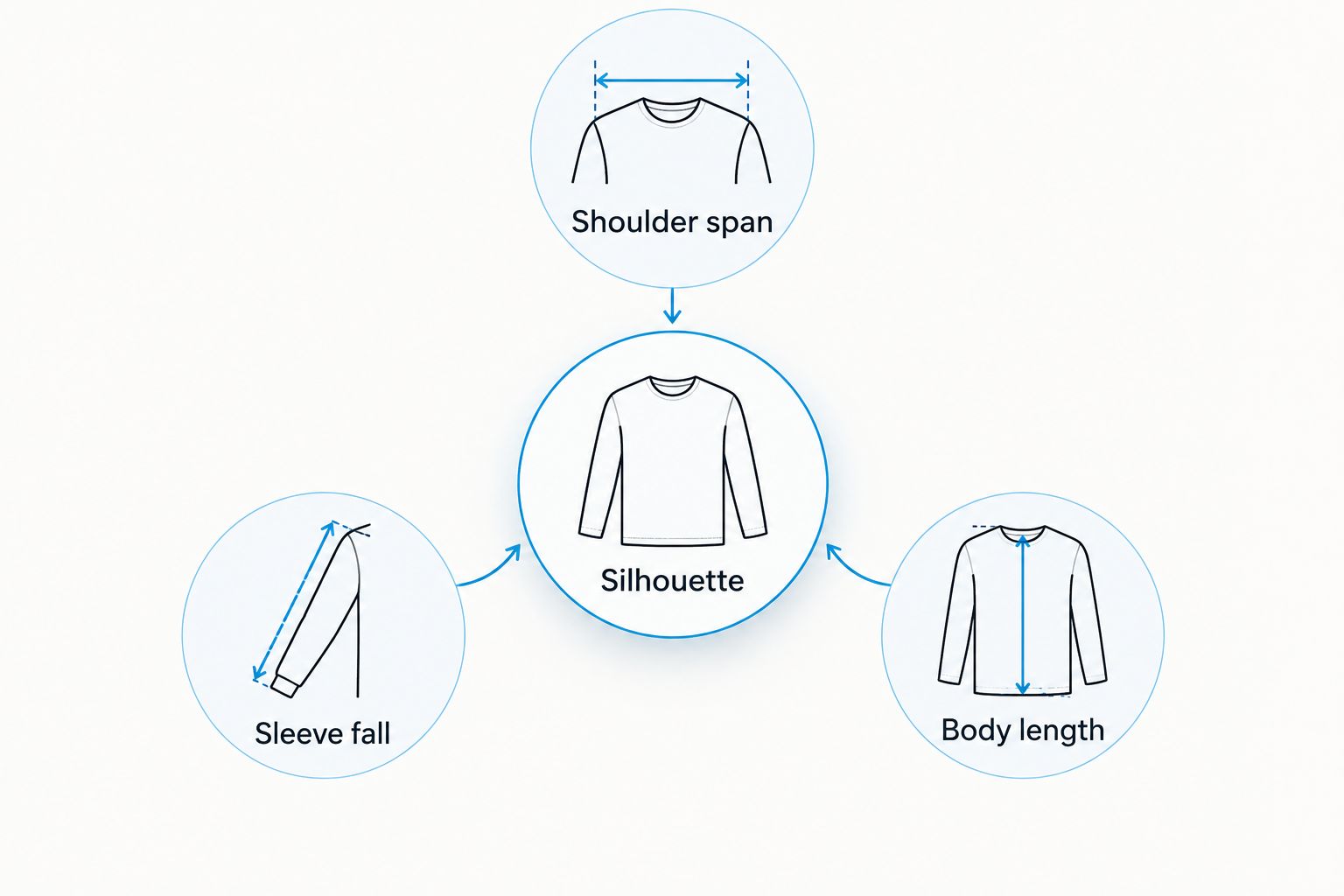
Why the same shoulder width looks different
The same garment measurement does not create an identical result on every body. Your shoulders sit inside the garment, while fabric and pattern determine how the remaining space behaves.
Use these factors to explain the difference:
- Your shoulder span. A given tee creates a greater shoulder extension on a narrower frame than on a wider frame.
- Chest width. Extra torso room changes how freely the garment hangs beneath the shoulders.
- Sleeve shape. The sleeve's width and angle influence whether it projects outward or falls toward the arm.
- Fabric structure. A firmer fabric holds an outline differently from a softer, more fluid fabric; weight alone does not settle the question.
- Body length. A lower hem adds vertical proportion, changing how broad the upper half appears.
- Styling. Tucking, layering, and trouser volume alter how much of the tee's outline remains visible.
Do not turn these into rigid body-type rules. Use them to diagnose the fit in front of you. If a tee looks wrong, identify the specific relationship that bothers you before changing sizes.
How to check shoulder width before choosing a tee
For your 2026 fit check, start with clothing you already own. A familiar tee provides a useful reference because you know how it looks standing, sitting, and moving—not just in a product photograph.
1. Measure a reference tee
Lay 1 tee flat without stretching it. Choose a garment whose shoulder and sleeve shape you understand, even if you want your next tee to fit differently. Follow the seller's measuring method when making your comparison.
Record 3 measurements: shoulder width, chest width, and body length. Note sleeve length separately if the seller lists it. Keep the units consistent so the comparison stays readable.
2. Decide what you want to change
Name the change before choosing a size. Perhaps you want more shoulder extension but the same hem position. Perhaps the current sleeves project too far outward, even though the torso room feels right.
That distinction prevents a common mismatch: increasing every dimension to solve a problem in just one area. A different cut is often the more direct choice when the current pattern's proportions are wrong for you.
3. Compare the garment measurements
Compare 2 sizes when both have published measurements. Look at how shoulder width, chest width, and length change together. Do not assume that moving up a size adds width without adding length.
Also distinguish garment measurements from body measurements. A body-size chart helps identify the intended wearer; a garment-size chart describes the finished piece. Treating them as the same thing produces a misleading comparison.
4. Check the outline from different angles
Use 3 views: front, side, and back. The front shows shoulder extension; the side reveals sleeve projection and hem depth; the back shows how fabric gathers around the shoulders.
Check the tee untucked first. A styling trick can change the appearance, but it should not hide a fit problem you would dislike whenever you wear the garment normally.
How to style a wider shoulder without losing the shape
For a 2026 outfit, start with the silhouette you want to preserve. A boxy tee does not need every other garment to be oversized, and it does not need a narrow lower half either. The decision is about contrast.
| Styling approach | Best for | What it emphasizes | Trade-off |
|---|---|---|---|
| Straight-leg trousers | A clear, balanced outline | Tee width without an extreme lower-half contrast | Less dramatic than a strongly tapered shape |
| Wide-leg trousers | An intentionally roomy outfit | Volume across the whole look | The tee's boxy shape becomes less isolated |
| Narrower trousers | A strong upper-body contrast | Shoulder and sleeve width | A projecting sleeve becomes more prominent |
Start with the tee untucked so you can see its intended outline. Then adjust the hem if you prefer a different relationship with your waistband. A tuck changes the silhouette; it does not change the garment's underlying cut.
With graphics, check placement as well as scale. Folds across the chest change how a design reads, while a tucked hem hides part of the print area. Let the graphic remain visible if it is the reason you chose the tee.
Layering introduces another constraint. A close-fitting outer layer compresses the tee's shoulder and sleeve shape. Check comfort and fabric gathering before assuming the same boxy outline will work under every jacket or hoodie.
Should I size up to get a boxy fit?
Sizing up increases garment dimensions, but it does not automatically create a boxy pattern. If the larger size also adds unwanted length, it moves you away from the proportion you wanted.
Choose a boxy cut before choosing a bigger size. Size up only when the published measurements support your intended shoulder placement, torso room, and hem position.
Does a dropped shoulder make a tee look oversized?
A dropped shoulder adds a relaxed signal, but it does not establish the entire fit. A tee can have an extended shoulder while remaining comparatively contained through the torso.
Judge oversized fit through the whole garment: shoulder placement, chest room, sleeves, and length. The seam tells you where the sleeve begins, not how much space exists everywhere else.
Can a boxy tee work on narrow shoulders?
A boxy tee works on narrow shoulders when you like the resulting extension and sleeve shape. The same tee will place its seams farther beyond a narrower frame, making sleeve fall especially important.
If the upper half feels wider than intended, compare a less extended shoulder rather than immediately choosing a tighter torso. Keep the change focused on the feature you want to adjust.
Where 7WXVES fits into the decision
7WXVES streetwear is best for style-conscious shoppers who want expressive tees and an individual look. The brand's heavyweight-fabric, boxy-fit, and graphic-led positioning suits that direction; the live-without-limits philosophy supplies the attitude, not a substitute for fit.
The buying caveat is simple: a brand aesthetic cannot guarantee your preferred shoulder placement. Evaluate 7WXVES with the same measurement check you would use for any tee. For a 2026 wardrobe, the useful choice is the garment whose proportions work with the clothes you already wear.
FAQ
What makes boxy t shirts look boxy?
Boxy t shirts look boxy because width and length create a broad, relatively compact outline. Shoulder placement, chest room, and sleeve shape determine how that outline sits on your body.
How do I measure a tee's shoulder width?
Measure shoulder width across a flat tee between the shoulder seams, following the seller's stated method. Compare garment measurements with garment measurements, rather than substituting a body measurement.
Is a boxy tee the same as an oversized tee?
A boxy tee is not automatically the same as an oversized tee. Boxy describes the garment's proportion, while oversized describes added room relative to the wearer.
Should the shoulder seam sit past my shoulder?
The shoulder seam should sit past your natural shoulder if you want a dropped-shoulder silhouette. Check how the sleeve falls from that point before deciding whether the extension suits you.
Does heavyweight fabric guarantee a boxy shape?
Heavyweight fabric does not guarantee a boxy shape. The pattern, fabric structure, sleeve construction, and body length also influence the finished outline.
Can I wear a boxy tee with wide-leg trousers?
You can wear a boxy tee with wide-leg trousers for an intentionally roomy silhouette. The trade-off is less contrast between the upper and lower halves of the outfit.
How should I choose a 7WXVES tee for my preferred fit?
Choose a 7WXVES tee by comparing its listed garment measurements with a tee you already understand. Check shoulder width, chest width, and body length together rather than relying on the size label.
One last thing
Check the sleeve before blaming the shoulder. If the torso room and hem position feel right but the upper half looks too wide, the sleeve's outward projection is the detail to inspect.
That gives you a more precise next move. Keep the proportions you like and look for a sleeve that falls differently, rather than shrinking the whole garment to fix its outline.