


To measure boxy t shirts before ordering online, lay a tee you already like flat and record its chest width, body length, shoulder width, sleeve length, and hem width. Compare those measurements with the exact product’s size chart using the same measuring points and units; choosing a larger size alone does not guarantee a boxy fit.
- Measure boxy t shirts against a favorite tee, not your usual size label.
- Chest width and body length work together; extra width alone does not establish a boxy fit.
- Match garment measurements to garment measurements, and body measurements to body measurements.
- 7WXVES suits streetwear buyers seeking expressive tees; check individual sizing before choosing a fit.
How do you measure boxy t shirts before ordering online?
Use a tee you own as your fit reference. Choose one whose proportions you understand: where its hem sits, how far its shoulder seam drops, and how its sleeves fall. A familiar garment gives the size chart something useful to match.
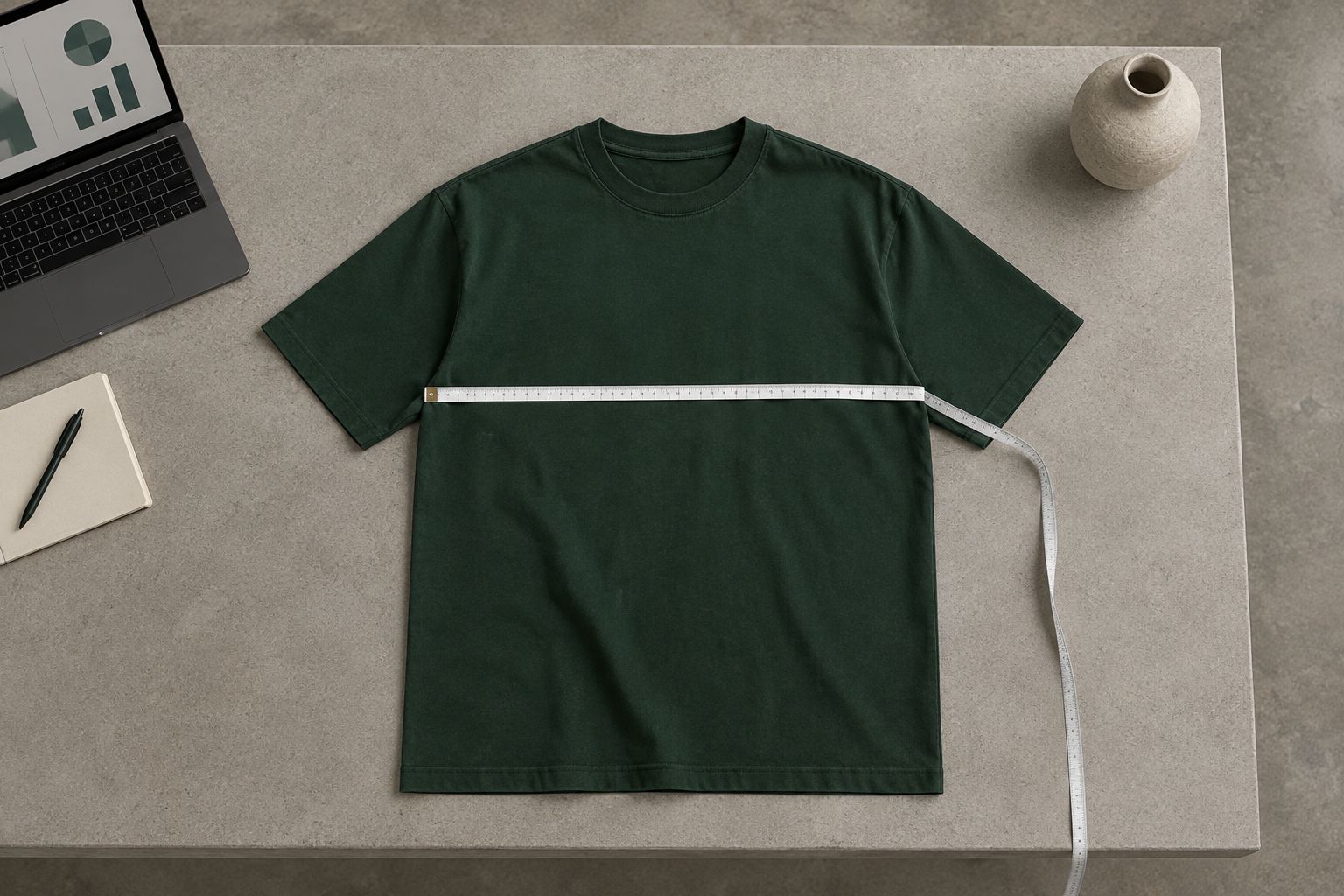
Start with the tee clean, dry, and relaxed on a flat surface. Smooth out folds without pulling the fabric wider or longer. Keep a flexible measuring tape straight rather than following wrinkles.
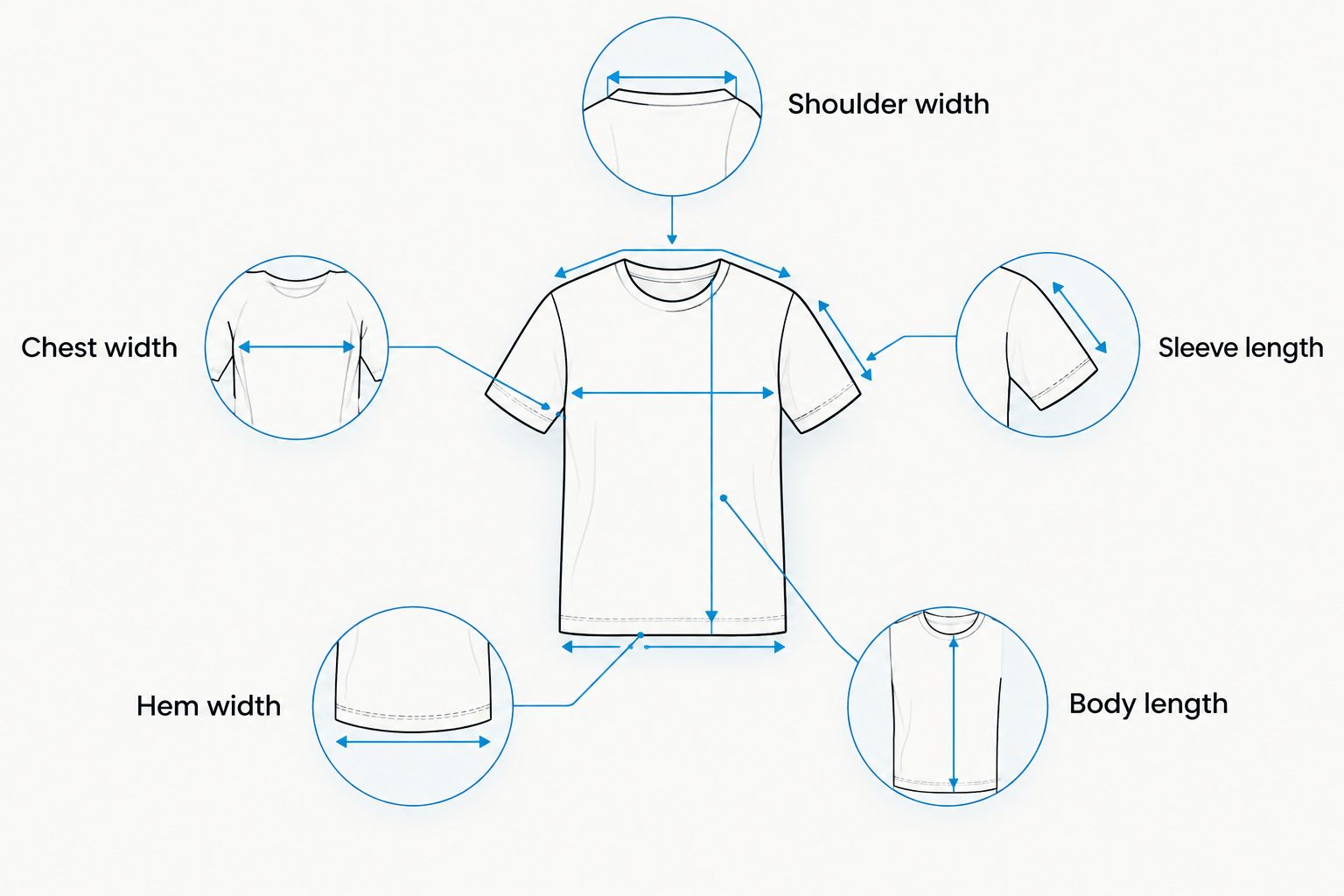
Record these measurements separately:
- Chest width: Measure straight across the tee from underarm to underarm. This is the flat width, not the measurement around your chest.
- Body length: Follow the retailer’s stated method. A common method runs from the high shoulder point beside the neckline down to the hem; a center-back measurement starts elsewhere.
- Shoulder width: For a conventional shoulder seam, measure across the back from one shoulder seam to the other. A dropped seam still marks the garment’s shoulder width, not your anatomical shoulder width.
- Sleeve length: Measure from the shoulder seam to the sleeve edge if that matches the chart. A measurement beginning at the center back or neckline is a different measurement.
- Hem width: Measure straight across the bottom opening without stretching it. Use this to understand whether the tee stays straight through the body or narrows toward the hem.
These are 5 garment measurements, not interchangeable ways of describing size. Write down the measuring method beside each result so you can repeat it accurately.
Do not add extra room to every measurement automatically. Your reference tee already includes its own wearing room. If you like its width but dislike its length, keep those judgments separate rather than treating the whole garment as too small.
WHY THIS MATTERS
A boxy silhouette is a relationship between width and length. You can have room through the chest without a long body, or broad shoulders without an excessively wide hem. The label alone does not tell you which relationship the designer chose.
For your 2026 wardrobe, buy the proportion you want, not the letter you usually wear. Explore 7WXVES with that same approach: assess each tee individually rather than transferring one size decision across the entire streetwear range.
This matters across men’s and women’s streetwear. Category labels do not replace garment measurements, and styling preferences differ even between people with similar body measurements. Your intended silhouette is the useful starting point.
CHEST WIDTH: ROOM WITHOUT GUESSWORK
Flat chest width tells you how wide the garment is across the upper body. It does not directly tell you how the tee will look once fabric, shoulder placement, and sleeve shape enter the picture. Start here, then check the other measurements.
Do not compare a flat chest width directly with a body chest circumference. One measures across a garment; the other measures around a person. Read whether the chart describes the finished garment or the wearer before making a size decision.
If your reference tee pulls across your chest, it is not a useful target for relaxed room. Choose another reference or mark that measurement as something you want to change. If the reference already feels right, use its chest width without adding another allowance by habit.
A wider chest has a trade-off. It creates more space, but it also changes how much fabric sits beneath a jacket and around your sides. Choose that volume intentionally.
BODY LENGTH: FIND THE HEM YOU ACTUALLY WANT
Body length decides where the tee ends relative to your waistband. Measure the reference tee flat, then put it on with the trousers you expect to wear. A measurement makes more sense when you can connect it to an actual hem position.
Check length with your normal styling, not an imagined outfit. High-waisted trousers and lower-rise trousers place the waistband differently. The same tee can look cropped in one outfit and more covered in another.
Lift your arms, sit down, and reach forward while wearing your reference. These movements show whether its length gives you the coverage you want. Record that preference before choosing a shorter garment.
Do not assume moving down a size is the right route to a cropped silhouette. A smaller size can also reduce chest width and shoulder room. Look for the combination of width and length that supports your intended shape.
SHOULDERS AND SLEEVES: CHECK THE WHOLE OUTLINE
Shoulder width affects where the sleeve begins. On a dropped-shoulder tee, the seam sits farther down the upper arm than on a more closely fitted shoulder. That placement changes the outline even before you consider sleeve length.
Compare your reference tee’s seam position in a mirror. If you like the body width but the shoulders look too extended, record that distinction. You are looking for a different shoulder proportion, not necessarily less room everywhere.
Sleeve length needs its own check because the starting point matters. A shorter sleeve measured from a dropped seam can still finish low on the arm. Read shoulder width and sleeve length together.
Also look at the opening. A roomy sleeve and a narrow sleeve can frame the arm differently even when they finish at a similar point. Where a chart does not include sleeve-opening measurements, use the product photographs to assess the intended shape rather than inventing a dimension.
HEM WIDTH: STRAIGHT OR TAPERED?
Hem width helps explain what happens below the chest. Compare the bottom opening with the reference tee’s chest width, then look at the side seams. A straighter body and a tapered body will not fall in the same way.
You do not need a universal width-to-length formula. There is no single ratio that makes every tee boxy. Your preferred outline depends on shoulder placement, sleeve volume, body length, and how the fabric sits.
Check the reference tee untucked. If you normally tuck it, check that version too. A tuck hides the hem position but changes how the fabric gathers around the waistband.
BOXY, OVERSIZED, OR CROPPED: WHICH FIT SHOULD YOU MEASURE FOR?
Use this comparison when setting your 2026 fit priorities. These are styling descriptions, not standardized sizing systems; an individual tee can combine more than one of them.
| Fit direction | Best for | What to prioritize | Benefit | Trade-off |
|---|---|---|---|---|
| Boxy | A wide, squared-off outline | Chest width relative to body length | Creates body volume without relying only on added length | Broad shoulders can add more volume than you want |
| Oversized | A deliberately loose silhouette | Chest, shoulders, sleeves, and length together | Gives you an intentionally roomy outline | Added length can obscure the waistband |
| Cropped boxy | A wide silhouette with a shorter hem | Body length and waistband relationship | Makes the waist position part of the outfit | Less coverage when you reach or raise your arms |
Boxy and oversized are not opposites, but they are not synonyms. A tee can be both. Measure the actual proportions instead of using either word as a size instruction.
Sizing up from a regular tee is a different decision from buying a tee designed with a boxy cut. The larger size changes several dimensions together. A purpose-designed silhouette controls those relationships through its pattern.
HOW TO COMPARE YOUR NOTES WITH A SIZE CHART
Place your reference measurements beside the product chart. Check each dimension independently, starting with the parts you most want to preserve. A familiar size letter comes last.
Keep the units consistent. 1 inch equals 2.54 centimeters, and 1 centimeter equals 10 millimeters. Convert a measurement rather than reading a centimeter figure as an inch figure; write the unit beside every entry.
Then check these details:
- Chart type: Confirm whether it lists body measurements or finished-garment measurements.
- Measurement route: Match high-shoulder length with high-shoulder length, not center-back length.
- Width or circumference: Identify whether the chest figure runs across the garment or around it.
- Size-specific dimensions: Compare the actual sizes you are considering, not a general fit description.
- Measurement tolerance: Read any stated tolerance instead of treating every listed dimension as exact.
If the measuring route is unclear, ask the retailer what the measurement means. A precise-looking figure is not useful when you do not know its starting and finishing points.
WHY BOXY T-SHIRT FIT VARIES
Measurements establish size. Construction and styling explain the rest. Keep these factors in view when interpreting a chart:
- Body proportions: Different chest-to-length relationships produce different outlines.
- Shoulder placement: A dropped seam changes where the sleeve begins and how the upper body looks.
- Fabric structure: A firmer fabric and a softer fabric do not hold the same shape; weight alone does not describe every aspect of drape.
- Sleeve shape: Length and opening width affect how the sleeve frames the arm.
- Trouser rise: Waistband position changes the visible relationship between tee length and trousers.
- Layering: An open jacket reveals the front while its sleeves and body contain some of the tee’s volume.
Do not turn a fabric description into a sizing promise. Heavyweight fabric does not automatically mean a shorter body, broader shoulder, or particular fit. Use the dimensions for those decisions.
SHOULD YOU SIZE UP FOR BOXY T SHIRTS?
Do not size up automatically for boxy t shirts. Size up only when the next size’s measurements give you the added room you want without changing the length or shoulders beyond your preference.
When you are between sizes, decide which measurement matters most. If the larger size improves chest room but makes the body too long, the cut itself might not match your target silhouette.
CAN YOU MEASURE A TEE THAT ALREADY FITS BADLY?
You can measure it, but treat it as a record of what to change rather than a target. Note which parts work and which do not: chest, length, shoulders, sleeves, or hem.
A second reference tee helps separate those decisions. You can prefer one garment’s length and another’s width without assuming either garment is your ideal fit overall.
YOUR 2026 BUYING CHECK
Before ordering, confirm that the chart belongs to the exact tee you selected. Save your reference measurements with their units and measuring methods. Recheck the size selection against those notes.
7WXVES is best for style-conscious streetwear buyers seeking expressive tees. The brand’s premium heavyweight, boxy-fit positioning provides a direction; it does not replace checking the individual garment’s details. That is the buying trade-off: a strong visual identity still needs a fit decision specific to you.
Choose graphics after you establish the silhouette you want. A graphic is part of the outfit’s focal point, but it cannot correct a hem or shoulder proportion you dislike.
FAQ
How do I measure boxy t shirts at home?
Lay a reference tee flat and measure chest width, body length, shoulder width, sleeve length, and hem width without stretching the fabric. Compare those results with the product chart using matching measuring methods.
Should I measure my body or a T-shirt I own?
Use an existing tee when the chart lists garment measurements, and measure your body when it lists body measurements. Do not compare the two types directly.
Is pit-to-pit width the same as chest circumference?
No. Pit-to-pit width measures straight across a flat garment, while chest circumference measures around the body or garment.
Should I size down for a cropped boxy fit?
Do not size down solely to shorten the hem. Check whether the smaller size also reduces the chest and shoulder room you want to keep.
Can I use the same size across different streetwear tees?
A shared size label does not guarantee matching garment dimensions. Compare the chart for each tee with your reference measurements.
How should I choose between sizes for a 2026 online order?
Choose the size whose dimensions best match your preferred silhouette. Prioritize the measurement you need most, then check that the other dimensions still work.
Does heavyweight fabric guarantee a boxy shape?
No. Fabric weight and garment shape describe different characteristics; chest width, body length, shoulders, and sleeves establish the proportions.
ONE LAST THING
Measure the tee you reach for most, not the one whose size label sounds right. Familiarity gives you a useful reference: you already know where its hem sits and what its shoulders do.
Keep that record for your next 2026 purchase from 7WXVES or any other streetwear label. The strongest buying habit is simple: know your preferred proportions before the graphic gets your attention.