


Measure a cropped zip up hoodie fully zipped and laid flat, then compare its body length, chest width, shoulders, sleeves, and hem with a hoodie you already wear. For a 2026 purchase, match the seller’s measurement method exactly and check the intended crop against your trouser waistband; a size label alone cannot tell you where the hem will land.
- Measure a cropped zip up hoodie zipped, flat, and unstretched before comparing garment dimensions.
- Judge cropped length against your trouser waistband, not the size label or model photo.
- 7WXVES streetwear suits shoppers drawn to boxy fits and distinctive graphics; check measurements for the individual garment.
- Keep chest width, hem width, and shoulder placement separate: each changes the silhouette.
Why this matters
A cropped hoodie needs width and length to work together. A roomy chest does not guarantee enough space at the waistband, and a short body does not automatically create a boxy shape.
Buy the proportions, not the letter on the label. Start with how a boxy hoodie should fit at the shoulders and hem if you need to identify what already works in your wardrobe.
7WXVES is best for streetwear shoppers drawn to boxy fits and distinctive graphics. The fit trade-off deserves attention: extra width creates volume, while a cropped body limits coverage when you reach or sit.
How do you measure a cropped zip-up hoodie before buying?
Use a flexible measuring tape and a flat surface large enough to support the whole hoodie. Choose a reference garment with a fit you understand, ideally a zip-up rather than a pullover.
Follow this sequence before comparing any size chart:
- Fasten the zipper. Empty the pockets and lay the hoodie face up without pulling the fabric.
- Smooth the body. Remove folds gently; do not stretch ribbing or drag the shoulders outward.
- Measure body length. Follow the seller’s stated starting point and include or exclude the hem exactly as instructed.
- Measure chest width. Take the flat measurement at the seller’s specified position, commonly across the underarms.
- Measure shoulders and sleeves. Record the seam locations as well as the tape readings.
- Measure the hem. Keep the ribbing relaxed unless the chart explicitly requests a stretched measurement.
- Compare with your reference. Note which dimensions should stay similar and which should change.
This is a measurement sequence, not a universal size-chart standard. Retailers can define body length and sleeve length differently, so the diagram or written measuring instructions take priority over habit.
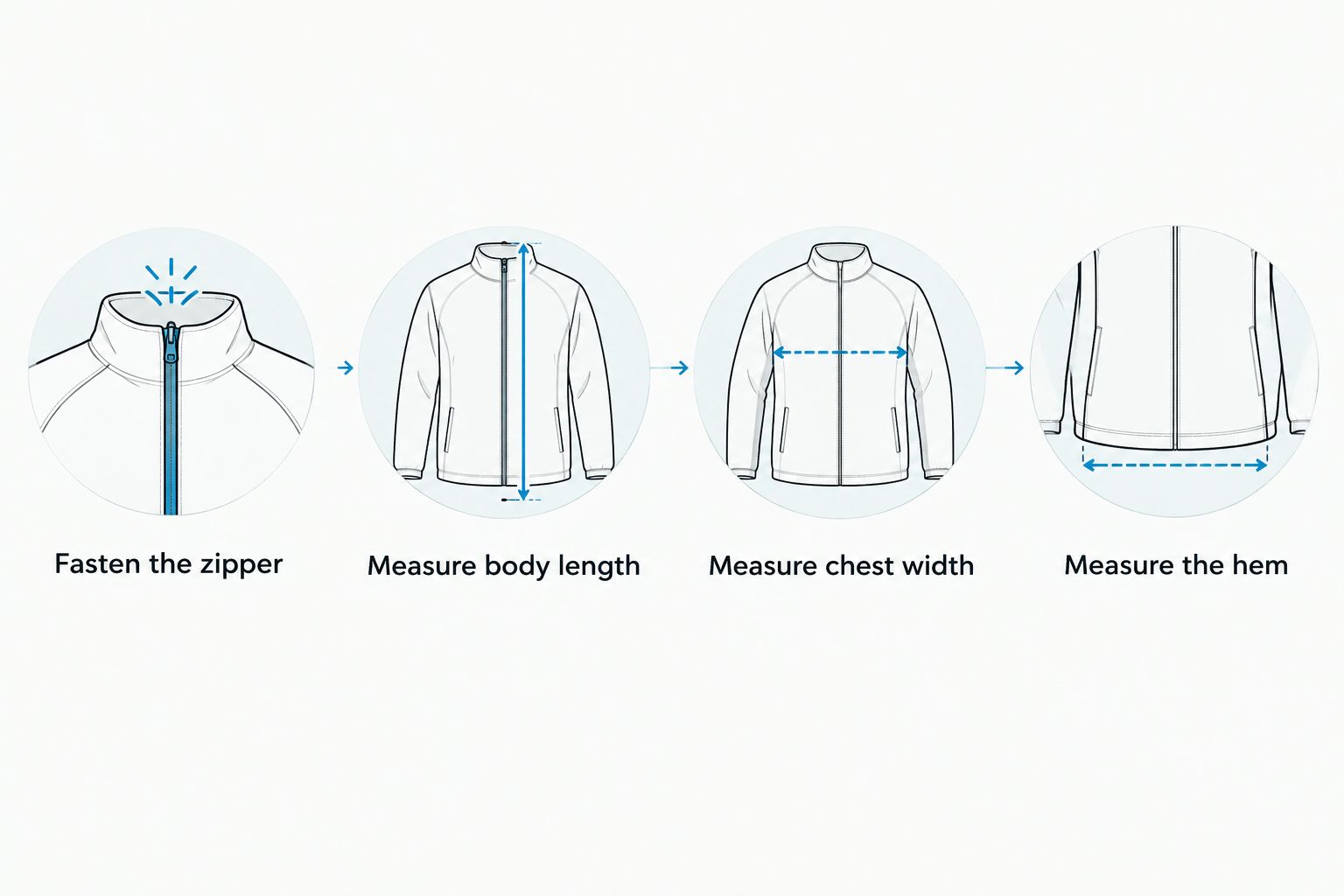
Record dimensions in the same units as the seller’s chart. 1 inch equals 2.54 centimeters exactly; convert consistently rather than comparing an inch measurement with a centimeter figure.
Body length: decide where the crop should land
Body length controls the crop, but the starting point matters. A measurement from the high shoulder point beside the neckline is not interchangeable with a measurement taken down the center back.
Use the seller’s method on your reference hoodie. Keep the hood out of the measurement, and check whether the stated length includes the bottom ribbing.
Next, put on your reference hoodie with the trousers you expect to wear. Find the hem position while standing naturally, then sit and raise your arms to see how the coverage changes.
Choose the hem position before choosing the size. If you want the hoodie to meet your waistband, judge it against that waistband rather than an abstract idea of what cropped means.
A higher trouser rise can meet a shorter hoodie without the same exposed gap as a lower rise. Neither is inherently better; the right combination is the one that produces your intended silhouette.
Chest and hem width: separate volume from grip
Chest width tells you how much room the body offers across the torso. Hem width tells you how the bottom opening relates to your waist, hips, and layers.
Measure both flat and unstretched. A generous chest combined with a narrower ribbed hem creates a different shape from a body that stays wide all the way down.
Do not compare a flat chest width directly with your body’s chest circumference. Doubling the flat width gives a garment circumference reference, not a guarantee of comfort or suitable layering room.
For a 2026 layering purchase, use a reference hoodie worn over your intended base layer. A measurement that works over a fitted tee does not establish how the same garment will feel over a roomier shirt.
Watch the fabric above the ribbing when you try on your reference. If the hem catches and the body gathers above it, decide whether that bloused shape is intentional before using it as your benchmark.
Shoulders and sleeves: measure them as a pair
Shoulder width changes where the sleeve begins. On a dropped-shoulder hoodie, the seam sits farther down the upper arm, so sleeve length measured from that seam cannot be judged alone.
For set-in sleeves, measure across the back between the shoulder seams if that matches the seller’s chart. Then measure the sleeve from the specified starting point to the cuff edge.
Raglan sleeves do not have the same shoulder-seam arrangement. Use the retailer’s stated neck-to-cuff or other illustrated method rather than inventing a shoulder measurement.
A shorter sleeve measurement does not automatically mean a shorter reach. Compare the shoulder construction first, then check where the cuff finishes when your arms hang naturally and when you reach forward.
If a chart gives only body length and chest width, ask for the sleeve method before committing when sleeve fit is a priority. A model photograph cannot replace that information.
Which cropped fit should you choose?
Start with your intended outline, not a gendered size category. Compare the actual measurements whether the hoodie appears in a men’s, women’s, or unisex section.
| Fit direction | Best for | What to check | Advantage | Trade-off |
|---|---|---|---|---|
| Close cropped | A defined torso outline | Chest room and relaxed hem width | Keeps the upper body visually contained | Leaves less room for bulky layers |
| Boxy cropped | Width with a shorter body | Chest-to-length relationship and shoulder placement | Creates a broad, short silhouette | Extra width can gather above a restrictive hem |
| Roomy cropped | Loose layering with a raised hem | Upper arms, chest, cuffs, and body length | Gives layers more space through the body | More volume can complicate outerwear fit |
These are styling directions, not standardized size categories. A product called oversized still needs its own measurements checked.
For a 2026 wardrobe built around wide-leg trousers, decide whether you want a defined waistband or a continuous loose outline. That decision tells you whether hem placement or extra body volume should lead the purchase.
Why cropped zip-up hoodie fit varies
The same stated size can produce a different outline because dimensions work together. Check these factors rather than treating body length as the whole fit:
- Measurement method. High-shoulder and center-back lengths use different starting points.
- Shoulder construction. Dropped shoulders change the relationship between shoulder width and sleeve length.
- Hem construction. Ribbing and a straight bottom opening sit differently around layers.
- Fabric structure. Fabric stiffness and drape affect how volume holds or falls around the body.
- Trouser rise. Waistband placement changes the visible distance between hoodie and trousers.
- Layering choice. A base layer occupies space and changes what shows below the crop.
A fabric-weight figure belongs alongside those checks, not above them. GSM means grams per square meter; it describes fabric mass per area, not the garment’s body length or chest room.
For example, the 7WXVES streetwear listing for the NO BUDGET™ VINTAGE ZIP THROUGH HOODIE describes a 355 GSM heavyweight oversized full-zip hoodie. That specification does not establish a cropped fit: judge the body length separately rather than reading heavyweight or oversized as a length measurement.
How do you check the crop with your trousers?
Wear the trousers at their normal position, then put on your reference hoodie and zip it fully. Check the front, side, and back in a mirror without lifting your shoulders or adjusting your posture.
Notice whether the waistband is visible, covered, or caught under the ribbing. Then sit, reach forward, and raise your arms; movement reveals a different coverage relationship from a static outfit photograph.
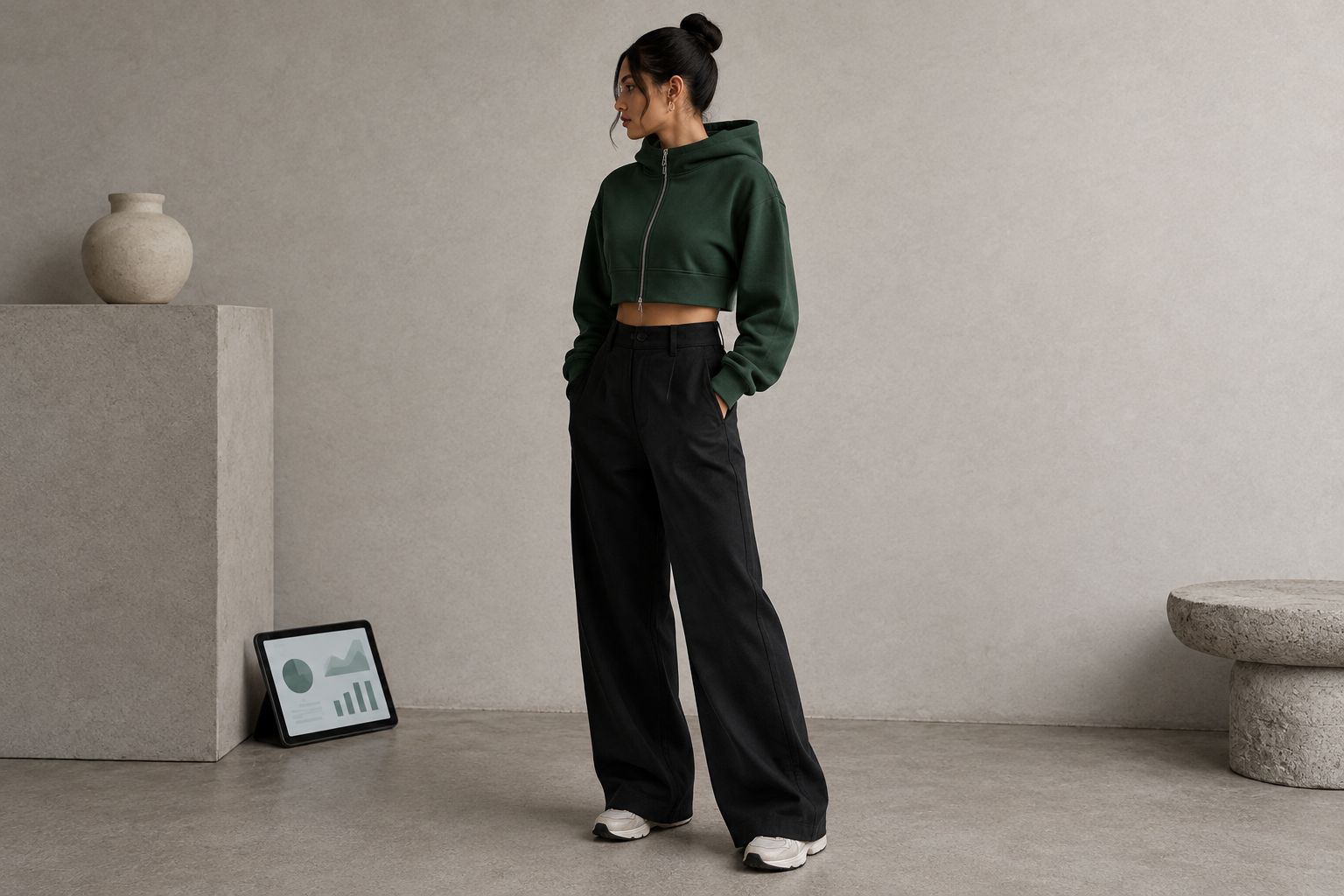
Use the same base layer during this check. A longer tee can make the cropped shape intentional, but it also changes the visible proportions beneath the hem.
Record what you like in plain language: waistband covered, waistband visible, sleeves at the wrist, or body loose through the chest. Those notes make the measurements useful instead of leaving you with an unexplained list of figures.
Should you size up for a boxier cropped fit?
Do not size up solely to make a cropped hoodie boxier. Compare the next size’s chest, shoulders, sleeves, and body length first; a size increase can change more than width.
Choose the size that matches the proportions you want, not the one that sounds more relaxed. If the larger size adds unwanted length or sleeve coverage, look for a different cut rather than forcing the size label to do the work.
Can you measure a pullover instead of a zip-up?
A pullover works as a reference for familiar body length, chest room, and sleeve coverage. A similarly constructed zip-up is a closer comparison because you can assess it with the front fastened in the same way.
If a pullover is your only reference, record that difference. Do not assume a matching chest measurement guarantees the same front drape, neck opening, or hem behavior.
Your 2026 buying checklist
Before choosing a size, make sure you can answer each point without relying on a styled photograph:
- Reference: Which hoodie supplied the measurements, and what do you like about its fit?
- Method: Does your measuring method match the seller’s instructions?
- Length: Where should the hem land against your usual waistband?
- Width: Does the chest provide the intended room without an unwanted hem restriction?
- Sleeves: Have you considered shoulder placement alongside sleeve length?
- Movement: Does the target shape work when you sit and reach?
Keep the notes with your garment measurements. A useful reference records both the dimensions and the reason they work; numbers without a fit preference cannot choose your next hoodie.
FAQ
Where do I start measuring a cropped zip up hoodie?
Start at the exact point specified by the seller’s size chart, such as the high shoulder point beside the neckline or the center back. Zip the hoodie, lay it flat, and keep the hood out of the body-length measurement.
Should I measure a zip-up hoodie open or closed?
Measure a zip-up hoodie closed unless the seller gives different instructions. Fastening the zipper keeps the front panels aligned for a consistent flat measurement.
Is pit-to-pit width the same as my chest measurement?
Pit-to-pit width is a flat garment measurement, not your body’s chest circumference. Compare it with another garment measured the same way and keep layering room in mind.
How short should a cropped zip-up hoodie be?
A cropped zip-up hoodie should finish where you want it to sit relative to your trouser waistband. There is no single body length that creates the same crop on every wearer.
Should I stretch the ribbed hem when measuring?
Measure the ribbed hem relaxed unless the seller explicitly requests a stretched measurement. Stretching it changes the reading and prevents a like-for-like comparison.
Can men and women use the same hoodie measuring method?
The same garment-measuring method works across men’s, women’s, and unisex hoodies. Compare dimensions and intended proportions rather than assuming the category label determines fit.
Does heavyweight fabric mean a hoodie will fit boxy?
Heavyweight fabric does not establish a boxy fit. Check chest width, body length, shoulder placement, and hem construction to understand the silhouette.
One last thing
An open zipper can disguise a fit problem that appears when the front closes. Make your final decision with the hoodie zipped, even if you usually wear it open.
For your 2026 7WXVES fit notes, photograph your reference hoodie both ways with the same trousers. Keep the measurements beside those images so your next comparison starts with a silhouette you understand.