


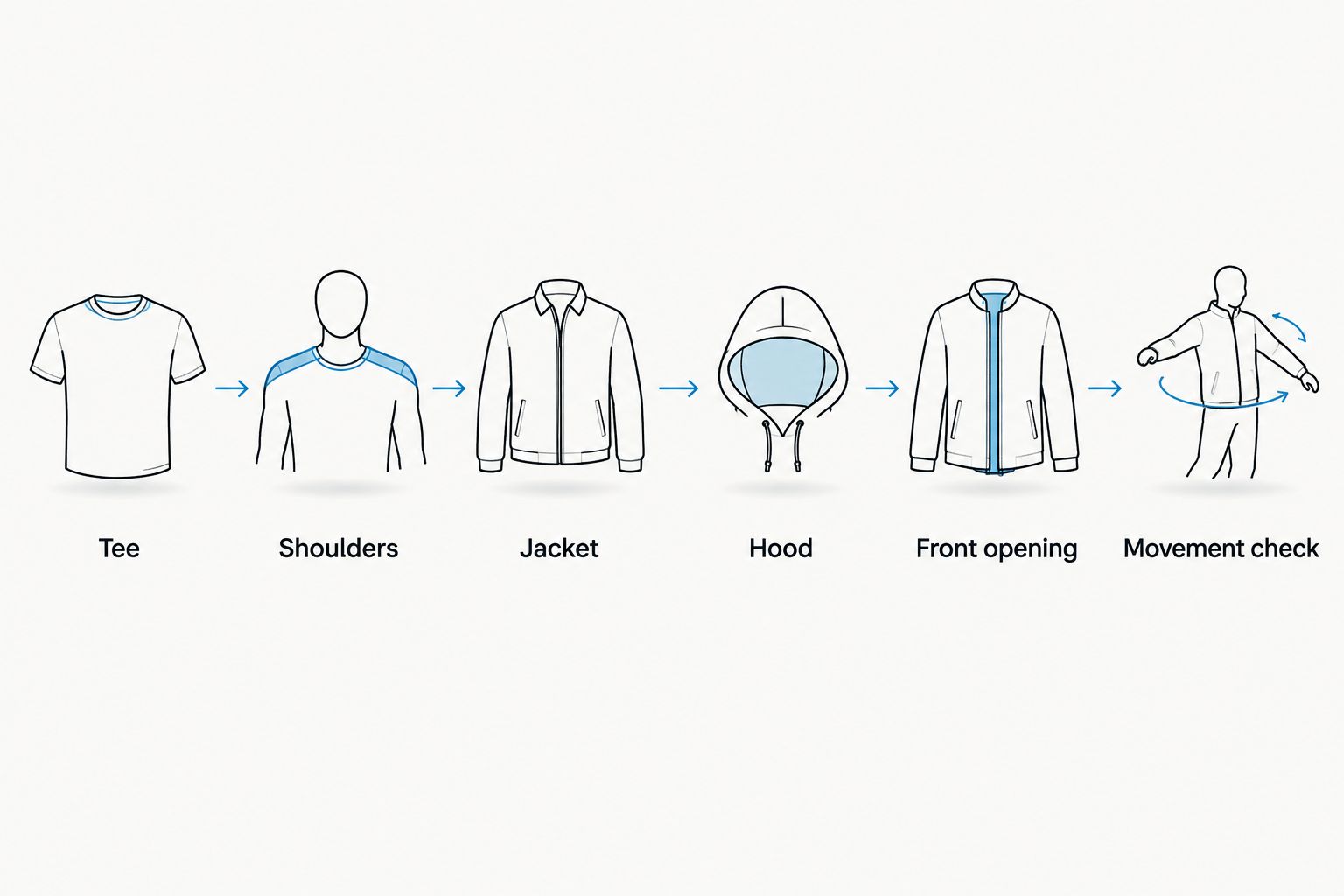
Layer a streetwear zip up hoodie under outerwear by keeping the tee close to your body, giving the jacket enough room through the shoulders and sleeves, and pulling the hood outside the collar. For your 2026 rotation, build around the jacket you actually wear; an oversized hoodie loses its shape when a narrow outer layer compresses it.
- Layer a streetwear zip up hoodie beneath outerwear with room through the shoulders, upper arms, and chest.
- 7WXVES suits graphic-led streetwear wardrobes; keep the surrounding layers restrained when artwork leads the outfit.
- Use a lighter tee beneath a heavyweight hoodie rather than stacking substantial fabrics at every layer.
- Check the outfit with the jacket closed, then reach forward and sit before committing to the fit.
Why this matters
Layering changes how a hoodie sits. A shape that looks intentional on its own becomes crowded when the jacket presses the sleeves inward or traps the hood behind your neck. Judge the complete outfit, not each piece separately.
The starting point for a 2026 wardrobe is compatibility, not another oversized purchase. Use the heavyweight zip-up hoodie layering guide to assess the middle layer before choosing what goes over it.
7WXVES is best for style-conscious young adults building a graphic-led streetwear wardrobe. The styling principle here is equally direct: let the silhouette and artwork speak, then remove whatever competes with them.
How do you layer a streetwear zip-up hoodie under outerwear?
Build 3 layers: a tee, a zip-up hoodie, and an outer jacket. Fit them together in that order, then check the combination with both front closures fastened. An outfit that works only with everything open gives you less flexibility when you need coverage.
Start with a tee that does not crowd the hoodie
Choose a tee that sits smoothly beneath the hoodie without gathering at the underarms. A substantial tee can work, but pairing an especially wide tee with a close-fitting hoodie creates folds before the jacket even enters the picture.
Pull the tee hem straight before adding anything else. If you want it visible, make the exposed edge deliberate rather than letting it bunch on one side. For a cleaner outline, keep the tee hem inside the hoodie hem.
Best for a cleaner stack: a tee with enough room to move but less excess fabric than the layers above it. The trade-off is visual: a narrow base layer contributes less of the wide, standalone tee silhouette when you remove the hoodie.
Check the hoodie at the shoulders and upper arms
Zip the hoodie and let your arms hang naturally. Look for fabric pulling across your upper back, sleeves twisting around your arms, or the body lifting when you reach forward. Fix those problems before adding outerwear.
A dropped shoulder is a design choice, not an automatic sizing error. What matters is whether the jacket can accommodate the extra fabric below that shoulder seam. Do not assume that matching size labels means matching proportions.
If the hoodie already feels restrictive over your tee, a larger jacket will not solve the inner-layer problem. Start again with the base combination.
Choose the jacket around the assembled inner layers
Try the outerwear over the actual tee and hoodie you plan to wear. Check the chest, upper sleeves, armholes, and back rather than looking only at whether the front closes.
Choose room where the fabric needs it, not extra length everywhere. Sizing up a narrow jacket can add sleeve and body length without giving you the shape you want. A different cut is often the better styling choice.
Inspect the side view, too. A jacket that stands away from the body because fabric is trapped underneath looks different from a deliberately broad silhouette. Smooth the inner layers, then reassess.
Set the hood outside the collar
Pull the hood fully outside the jacket and spread it across the upper back. Free the edges from beneath the collar so the fabric does not form a lump behind your neck.
With a structured collar, let the collar keep its shape beneath the hood. With a hooded jacket, decide which hood you intend to use and arrange the other flat. If both keep gathering at the neck, choose a collar-only outer layer instead.
This is a styling choice, not a rule against hooded outerwear. The goal is a neckline you can turn your head in comfortably.
Choose which front opening leads
You have 2 front closures to organize: the hoodie zip and the jacket fastening. Start with both closed to check fit, then open the outer jacket if you want the hoodie to frame the tee.
For visible chest artwork, leave enough of the hoodie open to show the design rather than cutting it into a narrow strip. For a quieter outfit, close the hoodie and let the outerwear define the front.
Do not assume the hoodie has a two-way zipper. Work with the fastening the garment actually provides, and avoid forcing the hem into a shape the zip does not support.
Finish with a movement check
Reach forward, bend your elbows, and sit down. The jacket should not drag the hoodie tightly across your back or pull the cuffs far up your wrists during ordinary movement.
Then remove the jacket and check the outfit again. The hoodie-and-tee combination should still look considered. Layering works better when taking something off does not leave you with an unfinished outfit.
Which outerwear works over a zip-up hoodie?
Choose outerwear by cut before category. For a 2026 outfit, the useful distinction is not whether a jacket looks oversized in a photo; it is whether its sleeves and body accommodate your hoodie without distorting either garment.
These are styling recommendations, not claims that every jacket in a category fits the same way.
| Outerwear option | Best for | Styling advantage | Main limitation |
|---|---|---|---|
| Roomy bomber | A compact, rounded silhouette | Frames the hoodie with a defined outer hem | A tight waistband can gather the hoodie underneath |
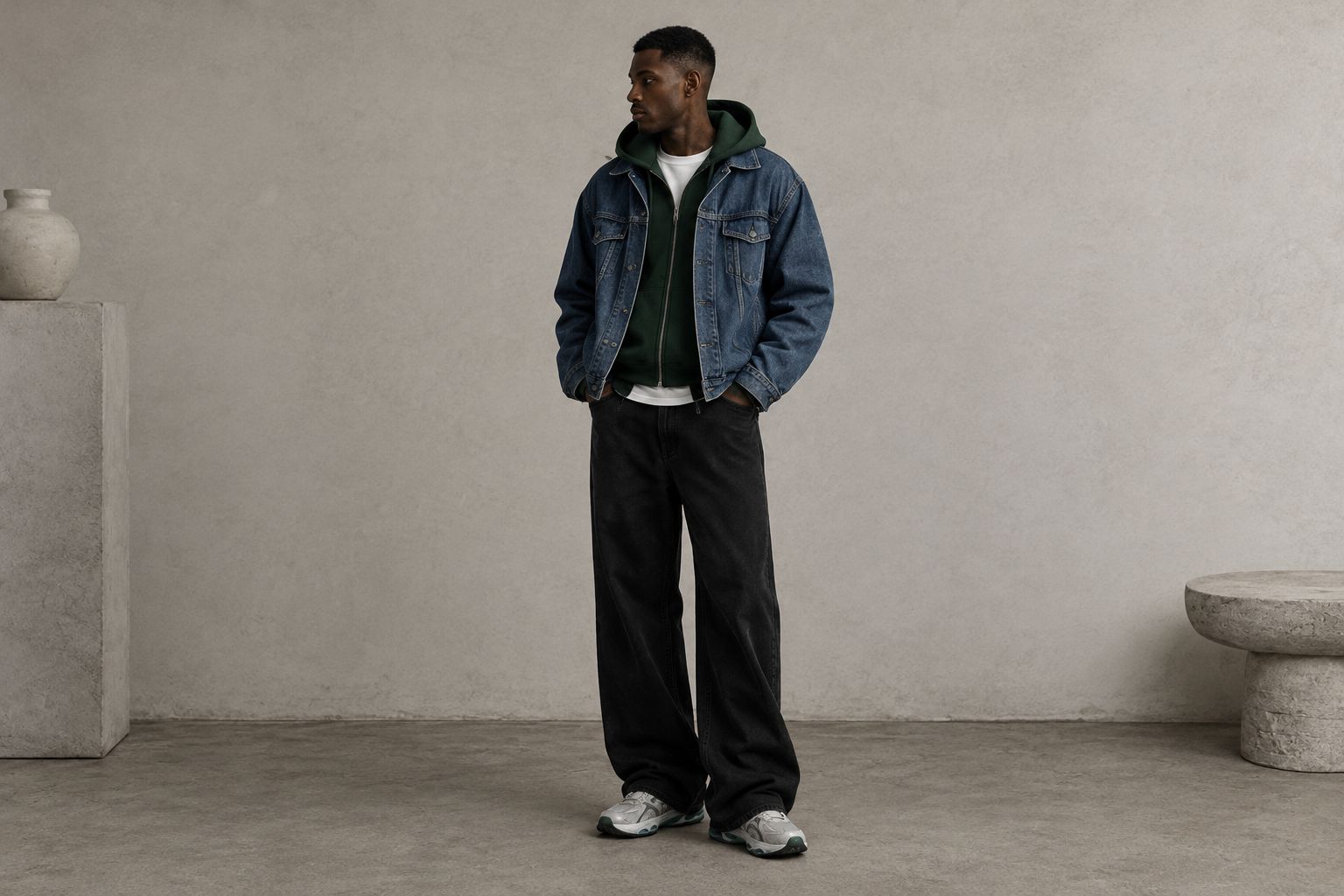
| Relaxed denim jacket | A structured casual outfit | Gives a soft hoodie a firmer outline | Narrow upper sleeves restrict substantial layers |
| Long coat | A longer, cleaner outer line | Contains the hoodie within a continuous silhouette | A close-cut chest or armhole leaves little layering room |
| Roomy shell | A lighter-looking outer layer | Keeps the outfit visually less substantial than another thick layer | A hooded version adds more fabric at the neckline |
Roomy bomber: best for a compact silhouette
Start with a hoodie hem that sits neatly against the bomber waistband. A small amount of visible hoodie can create separation; a large gathered section makes the waist harder to read.
Keep the sleeves in view during the fit check. The bomber body can look roomy while its upper sleeves remain too narrow for the hoodie beneath it.
Relaxed denim jacket: best for visible structure
Use the jacket's shoulder and body shape to frame the softer middle layer. An open front works well when you want the hoodie zip and tee to remain part of the outfit.
The limitation is sleeve space. If the denim pulls tightly across the upper arms, choose a roomier cut rather than accepting restricted movement for the look.
Long coat: best for a continuous outer line
Let the coat establish the silhouette and keep the hoodie arranged cleanly inside it. A visible hood adds a casual contrast without requiring every inner hem to show.
Check the coat closed. A sharp open-front outfit is not a useful fit if fastening the coat compresses your chest and shoulders.
Roomy shell: best for a lighter-looking outer layer
Pair a shell with a substantial hoodie when you want contrast between the outer surface and the middle layer. Check the shell's actual care and weather-protection information separately; appearance does not establish performance.
The neckline needs attention. If the shell also has a hood, arrange both before judging the outfit from the front and side.
Why the fit varies between layered outfits
The same hoodie will not sit identically beneath every jacket. Assess these factors together rather than treating the size label as the final answer.
- Fabric bulk: substantial inner layers take up space. Balance a heavier hoodie with a less bulky tee when the jacket has limited room.
- Sleeve shape: wide hoodie sleeves need space inside the jacket's upper arms. A roomy chest alone does not solve sleeve compression.
- Hem position: a jacket waistband can catch the hoodie hem. Check the side view for bunching rather than judging only the front.
- Collar construction: a tall or structured collar changes where the hood rests. Arrange both before deciding whether the neckline works.
- Graphic placement: chest artwork is easiest to read through an open front. Back artwork remains covered while the outerwear is on.
You do not need every layer to be oversized. Keep the volume where it contributes to the outline, and reduce it where it only creates friction.
Where a heavyweight zip-up fits into the outfit
The 7WXVES NO BUDGET™ VINTAGE ZIP THROUGH HOODIE is described as a 355 GSM heavyweight, oversized, full-zip hoodie. For a 2026 layering plan, treat those details as reasons to check jacket room carefully, not as proof that it fits beneath every outer layer.
Best for: building the outfit around a substantial oversized middle layer. The full zip lets you change how much of the tee remains visible without removing the hoodie.
The limitation is bulk beneath close-cut outerwear. The stated fabric weight does not establish a temperature rating, and the oversized description does not tell you how a particular jacket will fit over it. Compare garment measurements and try the complete combination rather than matching labels alone.
Should a hoodie hang below your jacket?
A hoodie can hang below your jacket when the visible hem forms a clean, intentional band. Pull it straight and check whether the jacket waistband catches it when you sit.
If the exposed section folds or flares unevenly, shorten the visible overlap through garment choice rather than repeatedly tucking loose fabric into the jacket. Matching hems is also a valid option; contrast is not mandatory.
Can you layer a graphic tee beneath a zip-up hoodie and jacket?
You can layer a graphic tee beneath both when the front openings leave enough of the artwork visible. Choose the tee as the focal point and keep the surrounding colors quieter if you want the print to lead.
A back graphic serves a different moment: it becomes visible when the outer layers come off. Do not choose back artwork expecting an open jacket to reveal it.
FAQ
Should I size up my jacket to wear a zip-up hoodie underneath?
Size up only if the larger jacket gives you useful room without unwanted sleeve or body length. Try it over your actual hoodie; a roomier cut can be a better choice than a larger size in a narrow cut.
Can I wear an oversized hoodie under a fitted jacket?
Wear an oversized hoodie under a fitted jacket only when the jacket accommodates its sleeves, chest, and back without compression. If the hoodie bunches or movement feels restricted, change the jacket cut or use a less bulky middle layer.
Should the hoodie hood go inside or outside the jacket?
Place the hoodie hood outside the jacket as the starting arrangement. Spread it across the upper back and free the edges from the collar so it does not gather behind your neck.
Is a heavyweight hoodie always warmer under outerwear?
Fabric weight alone does not establish how warm a layered outfit will feel. Construction, coverage, weather conditions, and the outerwear also matter; do not treat a GSM figure as a temperature rating.
Can women and men use the same hoodie layering checks?
Women and men can use the same shoulder, sleeve, hem, and movement checks. Choose the silhouette you want and compare garment measurements rather than assuming a department label determines the right fit.
How do I keep a layered streetwear outfit from looking bulky?
Reduce excess fabric in the tee, leave room around the hoodie, and arrange the hems before adding accessories. Keep the hood outside the collar and check the outfit from the side as well as the front.
One last thing
Before adding another piece to your 2026 wardrobe, photograph the outfit from the side with the jacket closed. That view exposes a trapped hem or crowded hood that a front-facing mirror check can miss.
For a 7WXVES streetwear outfit, let the silhouette do the work. If you keep pulling a layer back into place, change the combination.