


Choose a heavyweight zip up hoodie by checking its measurements over your usual tee, its fabric weight, and its shape both open and closed. For fall 2026, prioritize room through the chest and sleeves without adding unwanted body length; weight alone does not establish warmth, comfort, or quality. The deciding test is whether the hoodie works with your base layer and, when needed, beneath your jacket.
- Choose a heavyweight zip up hoodie by layered fit, not the heavyweight label alone.
- 7WXVES lists its NO BUDGET™ VINTAGE ZIP THROUGH HOODIE at 355 GSM; fit still needs checking.
- Boxy fit adds width without necessarily adding length. Compare garment measurements before sizing up.
- Try the hoodie open, closed, and beneath your intended outer layer before deciding.
Why this matters
A hoodie can look right on its own and feel wrong once you add the rest of your outfit. A broad tee sleeve can bunch inside a narrow hoodie sleeve. A thick hood can crowd a jacket collar. Extra length can change the entire proportion.
Choose the layered silhouette, not just the hoodie. Start with the tee you actually wear, rather than a thinner substitute that makes the fitting easier. The guide to choosing a heavyweight oversized T-shirt helps you assess that base layer before building over it.
How do you choose a heavyweight zip up hoodie for fall layering?
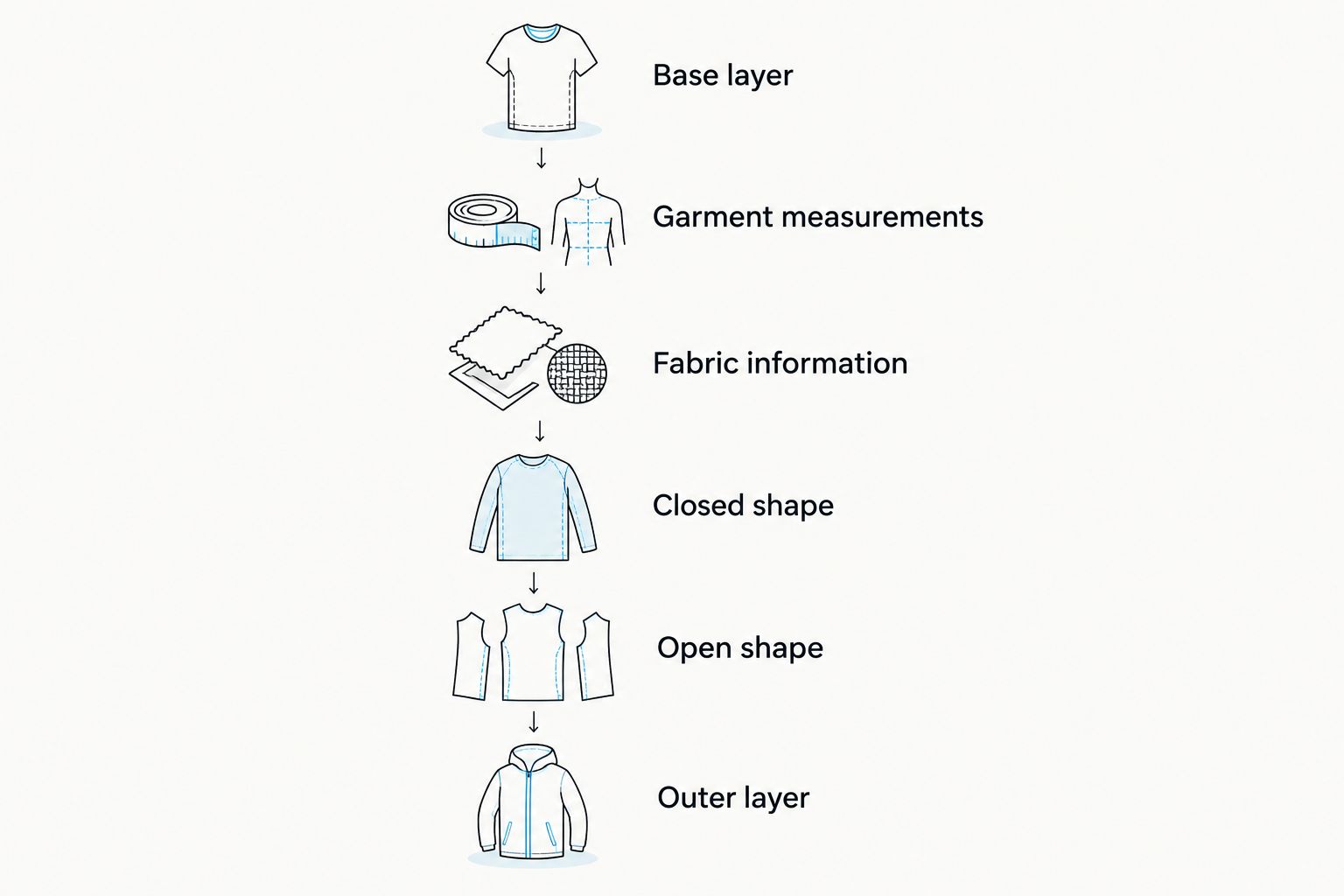
Use these checks in order. They separate the fit you want from details that only look convincing in a product photo.
- Choose your base layer. Try the hoodie over your usual tee. Check that the tee lies flat through the shoulders, sleeves, and waist rather than folding inside the hoodie.
- Compare garment measurements. Check chest width, body length, and sleeve length against a hoodie you already like. Follow the seller's measuring method so the comparison means something.
- Read the fabric information. Look for a stated fabric weight, composition, and construction. Treat each as a separate detail, not interchangeable proof of quality.
- Test the closed shape. Zip it fully, sit down, and bring your arms forward. Check for pulling across the chest, pressure at the neck, and excess fabric gathering above the waistband.
- Test the open shape. Let the front panels hang naturally. Decide whether the tee graphic, hoodie hem, and trouser rise create the proportions you want.
- Add your outer layer. Put on the jacket you intend to wear. Check the shoulders, upper arms, hood, and cuffs together.
For a fall 2026 purchase, reject a fit that only works while you stand still. Walking, sitting, and reaching are part of the fitting, not extra tests reserved for technical clothing.
What does heavyweight actually tell you?
GSM means grams per square meter: the mass of a measured area of fabric. It describes fabric weight, not the total weight of the finished hoodie. It does not tell you the garment's dimensions or how the sleeves fit over your tee.
7WXVES lists the NO BUDGET™ VINTAGE ZIP THROUGH HOODIE as a 355 GSM heavyweight oversized full-zip hoodie in its fall 2026 description. That supplies a specific fabric-weight reference. It does not replace the need to check garment measurements, composition, care instructions, or the zipper details before choosing.
7WXVES streetwear is best for style-conscious young adults who want an individual, graphic-led wardrobe. For this hoodie, use the stated 355 GSM as one buying detail—not a promise about weather protection or how it will fit your body.
A dense-looking garment can still have a silhouette you dislike. Conversely, the right outline does not establish how warm it will feel outdoors. Keep those judgments separate.
Boxy or oversized: which shape suits your layers?
Boxy and oversized describe different aspects of shape. Boxy points toward a broad, relatively short outline; oversized describes additional volume. A garment can be both, but neither label supplies its actual measurements.
Use the table to choose a direction, then confirm it against the size chart. These are styling recommendations, not standardized fit definitions.
| Shape | Best for | Main advantage | Main trade-off |
|---|---|---|---|
| Boxy | A broad upper silhouette without a long hem | Keeps width and length visually separate | A shorter body can expose more of the tee beneath |
| Oversized | A loose outline over a substantial base layer | Gives you more visual volume to work with | Added volume can crowd a fitted jacket |
| Closer-fitting | A restrained silhouette beneath outerwear | Reduces excess fabric under a jacket | Leaves less room for a broad or thick tee |
Start with your intended outline, then choose the size that produces it. Sizing up from a closer-fitting pattern is not a dependable substitute for a deliberately broad cut. You change the length and sleeves as well as the chest.
For men's and women's streetwear alike, the useful comparison is between the garment and your preferred proportions. A category label cannot tell you where the hem will land on your torso.
How should a boxy hoodie sit at the waist?
A boxy hoodie should finish where you want the outfit's upper volume to stop. Try it with your actual trousers, because waistband height changes how much tee shows underneath.
For a cleaner break, keep the tee hem near the hoodie's hem. For a visible layered effect, let the tee extend below it deliberately. Neither treatment requires a fixed gap; the right result depends on the outfit.
Check the zipper before judging the silhouette
A full zip gives you a styling choice that a closed front does not: you can reveal or conceal the base layer without removing the hoodie. The trade-off is a visible center line, and the front needs checking in both positions.
Run the zipper through its full travel without forcing it. Keep loose fabric clear of the teeth. Look for catching, uneven alignment, or front panels that sit differently when closed.
Check the fastening arrangement in the product details rather than assuming a particular zipper type. A full-zip description alone does not establish that the hoodie has a two-way zipper.
Judge the neckline fully closed, too. If you dislike the hood pulling toward your throat or the collar sitting against your chin, an attractive open-front photo does not solve that fit issue.
Why fall layering comfort varies
The same hoodie can feel different depending on what surrounds it. For your 2026 fall wardrobe, assess these factors together rather than making the fabric-weight number do all the work.
- Base-layer volume. Broad sleeves and a loose tee body need space inside the hoodie. Check for folds at the underarm and waist.
- Fabric construction. Read whether the listing describes French terry, fleece, or another construction. Do not infer the inside surface from an exterior photograph.
- Body and sleeve measurements. Chest room does not guarantee upper-arm room. Compare both areas before choosing a size.
- Outer-jacket space. A jacket must accommodate the hoodie through the shoulders, sleeves, and hood. Test the combination closed as well as open.
- How you wear the zip. An open front changes coverage and reveals the tee. A closed front changes both the outline and how the neckline feels.
- Your setting. An indoor commute and an exposed outdoor walk call for different outfit decisions. Do not treat an ordinary hoodie as weatherproof outerwear without explicit specifications.
Build the outfit around the open front
An open hoodie frames the tee rather than replacing it. Start by deciding which garment carries the visual emphasis. If the tee has the dominant graphic, keep the surrounding shapes controlled; if the hoodie is the focus, a quieter base layer makes that choice clearer.
For a broad upper half, try straight or wide trousers and check the outfit from the side. For a more tapered lower half, watch whether the hoodie feels intentionally roomy or simply disconnected from the rest of the look. These are visual judgments, not rules about body type.
Keep one clear point of emphasis. Multiple graphics can work, but inspect how they meet at the open front. A zipper can divide a composition in a way that looks deliberate—or leave competing fragments visible.
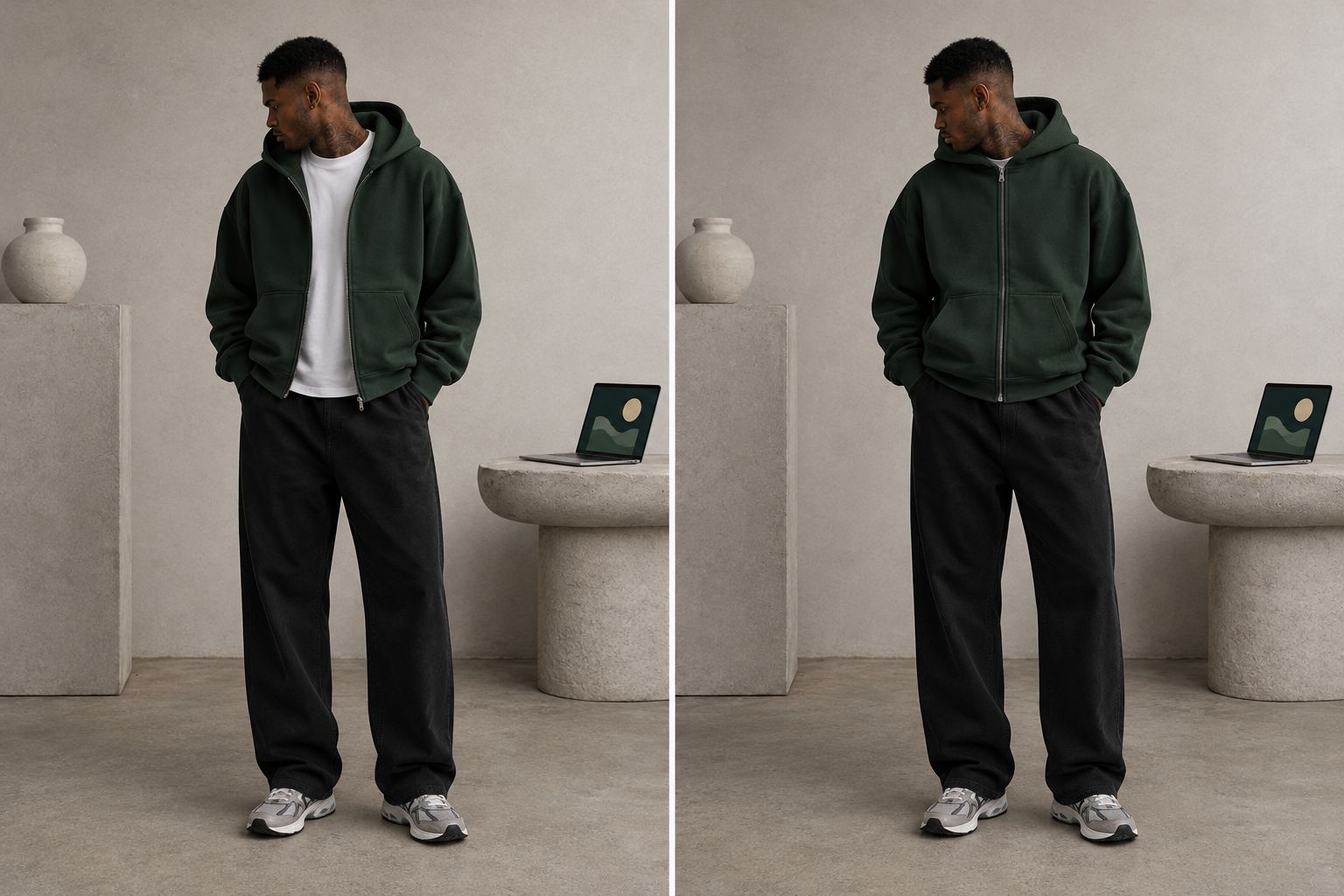
Do the final check with your usual footwear. The trouser shape you see barefoot is not necessarily the finished outfit. Look at the complete silhouette before changing hoodie size to fix a problem elsewhere.
Should you size up for a heavyweight zip-up hoodie?
Check 3 measurements before sizing up: chest width, body length, and sleeve length. If the pattern already includes the room you need, a larger size can add unwanted length without improving the outline.
Measure a hoodie you like laid flat, following the new garment's size-chart method. If the seller lists body circumference rather than flat garment width, do not compare those figures directly. Ask for clarification when the measuring method is unclear.
Can you wear a heavyweight hoodie under a jacket?
Test all 3 layers together: tee, hoodie, and jacket. Close the jacket, bring your arms forward, and sit down; shoulder pressure or bunched sleeves signal that the combination needs adjustment.
Choose the hoodie and jacket as a pair. More room in one garment does not compensate for restriction in the other, particularly through the upper arm.
Is 355 GSM enough to choose a hoodie?
355 GSM tells you fabric weight, not whether the hoodie suits your fall outfit. You still need the fit, composition, construction, and care information to make a useful comparison.
The 7WXVES hoodie description supplies that weight and identifies an oversized full-zip shape. Use those details to assess the style, then check the remaining product information rather than filling in the gaps yourself.
FAQ
What's the best heavyweight zip up hoodie fit for layering?
The best fit leaves room for your usual tee without bunching and works beneath your intended jacket. Compare chest width, body length, and sleeve length instead of relying on the size label.
Does a heavier hoodie automatically keep you warmer?
Fabric weight alone does not establish warmth. Construction, fit, coverage, and the surrounding layers also affect how the outfit feels.
Is a boxy hoodie the same as an oversized hoodie?
Boxy and oversized are not interchangeable. Boxy describes a broad, relatively short outline, while oversized describes additional volume; check measurements to understand the actual cut.
Should my T-shirt show below my zip-up hoodie?
A visible tee hem is a styling choice, not a fitting requirement. Keep the hems close for a cleaner break, or show the tee deliberately for a layered outline.
Can I wear a graphic tee under an open hoodie?
An open hoodie can frame a graphic tee. Check which parts of the print remain visible and whether the hoodie adds a competing focal point.
What does 355 GSM mean on a hoodie?
355 GSM means the fabric weighs 355 grams per square meter. It does not describe the total garment weight, guarantee warmth, or establish the hoodie's fit.
What should I check on a full-zip hoodie before choosing it?
Check the zipper's movement, front-panel alignment, neckline, and fit in both open and closed positions. Confirm the zipper type from the product details rather than assuming a two-way fastening.
One last thing
Do not solve every proportion problem by changing hoodie size. First adjust the tee hem, trouser rise, and how you wear the front. A different base layer can change the outfit without changing the hoodie at all.
Make that your final fall 2026 check: photograph the outfit open and closed, from the front and side. Choose the shape you want to wear—not merely the size you usually order.