


A boxy hoodie should sit wide through the shoulders without pulling across your upper back, with a hem that finishes cleanly around your chosen waist or hip line. A dropped shoulder seam is intentional; sleeves swallowing your hands or a hem repeatedly riding up are reasons to check the size and cut. Judge the shoulder, sleeve, and hem together—not the size label alone.
- A boxy hoodie needs relaxed shoulders and a deliberate hem position, not extra length everywhere.
- Check shoulder freedom, cuff placement, and hem recovery before choosing your size.
- Boxy and oversized describe different proportions; sizing up does not guarantee a boxy silhouette.
- 7WXVES streetwear is best for graphic-led wardrobes built around boxy fits and individual expression.
How should a boxy hoodie fit at the shoulders and hem?
The shoulders should look relaxed, and the hem should look placed. You want width that reads as a design choice, not fabric that hangs without direction. For your 2026 wardrobe, start with these 3 fit checks rather than a rule about which letter belongs on the label.
- Shoulder freedom: Let your arms hang, then reach forward. The upper back should allow movement without a tight horizontal pull.
- Cuff placement: Let the sleeves settle naturally. The cuffs should stay where you want them without constant pushing or folding.
- Hem recovery: Raise your arms, lower them, and watch the body settle. A temporary lift is normal; repeated adjustment signals a mismatch with your preferred fit.
These checks work together. A shoulder seam can sit well down your upper arm while the hoodie still fits correctly, provided the sleeves and body remain controlled. Conversely, a seam closer to your shoulder does not rescue a tight chest or restrictive back.
Why this matters
Boxy fit is about proportion. Width creates the outline, while body length determines whether that outline looks cropped, balanced, or elongated.
7WXVES centers its streetwear identity on boxy fits, distinctive graphics, and individual expression. Apply that same deliberate approach when choosing a hoodie: decide where the garment should end before deciding how large it should feel.
A useful 2026 buying question is not simply whether a hoodie looks oversized. Ask whether its shoulder width, sleeve length, and hem position produce the silhouette you actually want. Those are separate decisions.
Where should the shoulder seam sit?
On a dropped-shoulder hoodie, the seam sits beyond your natural shoulder point, toward the upper arm. That placement helps create a broad, relaxed outline. Do not size down solely to pull a deliberately dropped seam back onto your shoulder.
Look at the fabric between your neck and sleeve. It should fall without obvious tension across your upper body. Some folds belong to the construction; a taut line that appears when you reach forward deserves more attention than a loose fold at rest.
Check the hoodie in 2 arm positions: arms relaxed and arms reaching forward. A garment that looks convincing only when you stand perfectly still has not passed the movement check. Wear the layer you intend to use underneath, rather than testing over a thinner top and assuming the result will transfer.
A deeper shoulder drop also changes where the sleeve begins. That is why sleeve length measured from the seam alone tells you less than the complete shoulder-to-cuff relationship. Look at the garment on your body, not just the sleeve measurement in isolation.
Where should the hem finish?
A boxy hoodie does not have one mandatory finishing point. A cropped body can finish near the waistband, while a longer body can extend toward the hips. The right choice depends on how much trouser rise, waistband, and underlayer you want visible.
Use this comparison to choose a silhouette, not to assign a universal size.
| Hem position | Best for | What works | What to watch |
|---|---|---|---|
| Waistband level | Showing high-rise trouser proportions | Keeps the upper-body outline short and defined | Reaching can expose more of your underlayer or waist |
| Upper hip | Everyday styling with some waistband coverage | Gives coverage without requiring a long body | A tight band can push fabric upward and create unwanted blousing |
| Lower hip | Deliberately elongated layering | Leaves more body length below the waist | Extra length can obscure the short, wide shape you wanted |
Choose the finishing point first, then assess the width. If you prefer waistband-level styling, a longer hoodie is not automatically the better fit because it offers more coverage. If coverage matters most, a very short body will demand compromises when you move.
In 2026, treat cropped and boxy as separate choices. A hoodie can be wide without being cropped, and cropped without providing the shoulder room you want.
Waistband-level hems: short and defined
A waistband-level hem makes the relationship between hoodie and trousers immediately visible. It is a strong choice when you want high-rise trousers to remain part of the outfit rather than disappear under the top.
The trade-off is coverage. Sit down, reach overhead, and check whether the exposed layer or skin matches your intention. A fit is not wrong because it reveals your waistband; it is wrong for your needs when that reveal keeps surprising you.
Keep the base layer deliberate. A visible tee can extend the outfit below the hoodie, but an uneven strip of fabric can also interrupt the clean line you were trying to create. Decide whether the tee is meant to show before judging the hoodie length.
Upper-hip hems: coverage with shape
An upper-hip hem gives you another route to a wide silhouette without making the body particularly short. Look for a finishing point that remains readable rather than disappearing into folds at the waist.
The waistband construction matters here. A band that grips can hold the hoodie above its full hanging length, while a looser opening falls differently. Neither is automatically better; the question is whether you want a gathered outline or a straighter drop.
Check the side view. The front can look balanced while the back collects above the waistband or catches on a layer underneath. Release the hem, let it settle, and assess its natural position rather than arranging it for the mirror.
Why boxy hoodie fit varies
The same labeled size can produce a different outline because several parts of the garment affect the result. For a 2026 purchase, separate these factors before treating size as the only explanation.
- Shoulder construction: A dropped seam changes where the sleeve starts and how broad the upper body appears.
- Body length: A shorter body emphasizes width; a longer body carries that width farther down your frame.
- Hem construction: A gripping band gathers fabric differently from an opening that hangs freely.
- Fabric structure: A firmer fabric holds a different outline from a softer fabric that folds closer to the body.
- Your underlayer: A tee or other layer changes the space available inside the hoodie and how the hem settles.
- Trouser rise: The waistband position changes how much of your lower outfit sits above or below the hoodie hem.
Do not use fabric weight alone as a fit verdict. Weight does not tell you the finished shoulder width, body length, or opening shape. A heavier hoodie still needs the right pattern and measurements for your intended silhouette.
How do you check the fit before ordering online?
Use a hoodie you already own as a reference, but choose it for a specific reason. It might have the shoulder room you like while being too long through the body. Record that distinction instead of treating every measurement as a target.
Start with 2 measurements: chest width and body length. Compare them with the seller's stated measuring method, because measurements taken from different points are not directly interchangeable. Then review shoulder and sleeve information where provided.
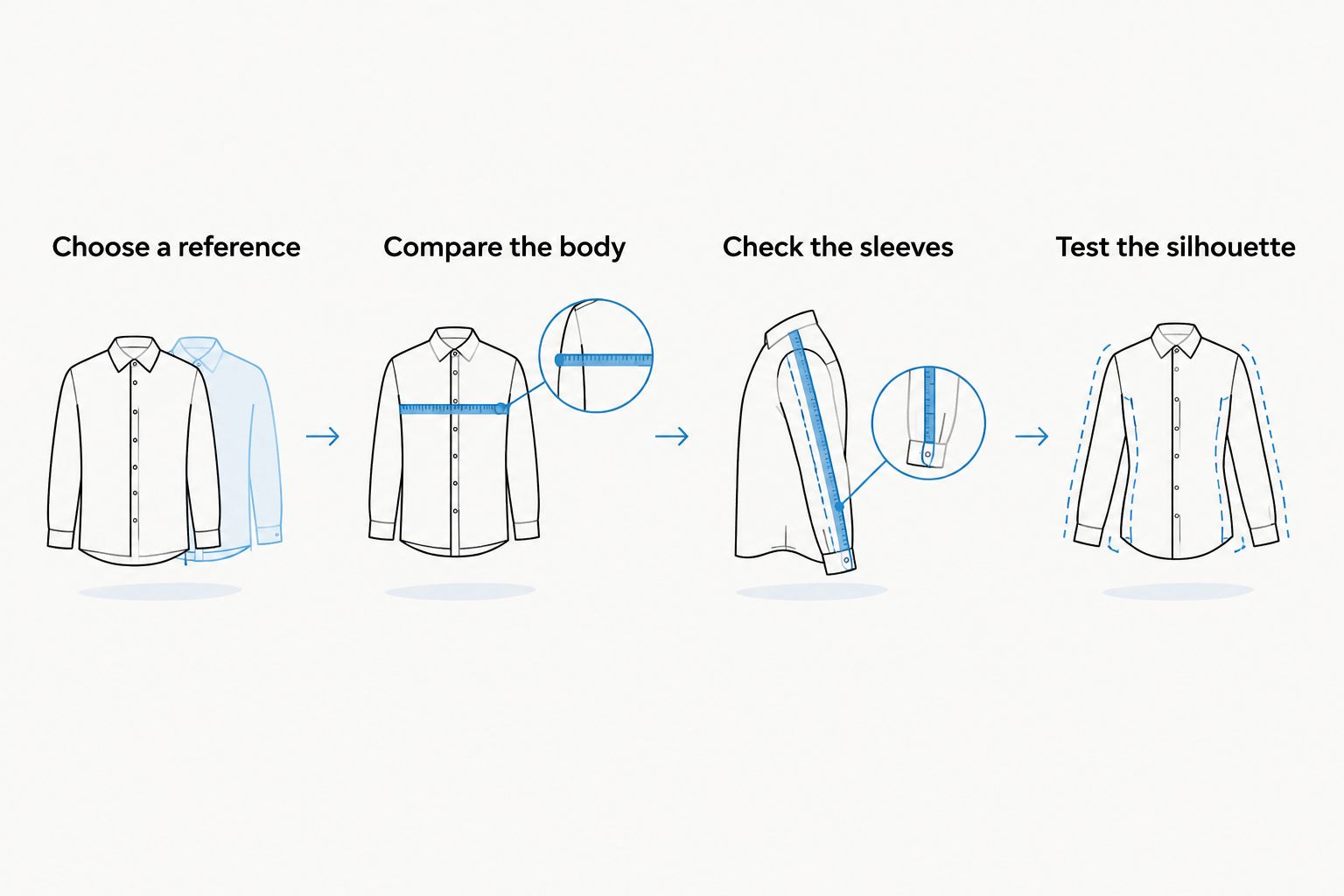
- Choose a reference. Lay your existing hoodie flat without stretching it. Smooth the fabric enough to see the outline.
- Compare the body. Check chest width and body length using the same measurement points as the garment information you are reading.
- Check the sleeves. Consider shoulder placement alongside sleeve length; a dropped seam changes how those dimensions work together.
- Test the silhouette. Put on your reference hoodie with the intended trousers and underlayer. Identify what you want the new garment to change.
Product photography helps you read the intended silhouette, but it does not replace garment measurements. A pose, tucked hem, or pushed-up sleeve can conceal the exact detail you need to assess. Look for an unadjusted view before making a decision about length.
Should you size up for a boxy hoodie?
Do not size up automatically for a boxy hoodie. Start with the garment measurements and intended cut; a larger size can add unwanted sleeve and body length alongside width.
If the chest and upper back feel restricted over your intended layer, compare the next size. If the shoulders already feel right but the hem hangs too low, consider a shorter cut instead. Changing size is not the same as changing proportion.
Keep your 2026 fit notes simple: what worked at the shoulders, where the hem landed, and what happened when you moved. Those observations are more useful for your next purchase than remembering only the label.
Is a boxy hoodie supposed to ride up?
A boxy hoodie can lift when you raise your arms, especially when the body is short or the hem grips. The useful test is what happens after you lower your arms: does it settle into your preferred position, or do you keep pulling it down?
Check for friction from your underlayer and where the band sits against your trousers. If the hoodie repeatedly catches in a position you dislike, reassess the hem opening, body length, or layering combination rather than assuming more shoulder width will fix it.
Can you wear a boxy hoodie over a longer tee?
A boxy hoodie can work over a longer tee when the visible hem is intentional. Keep the tee's outline clean enough that you can still read the hoodie's shorter, wider shape.
For a cleaner break at the waist, choose an underlayer that stays inside the hoodie. For a layered outline, let the tee show and check the result from the side as well as the front. The guide to layering streetwear T-shirts under an open jacket offers a related way to think about visible layers.
FAQ
How far should a boxy hoodie's shoulder seam drop?
A boxy hoodie's shoulder seam should drop as intended by the cut without creating restrictive movement or uncontrollable sleeve length. There is no universal distance that works across different patterns and bodies.
Should a boxy hoodie cover my waistband?
A boxy hoodie should cover your waistband only if that matches your intended silhouette. A waistband-level finish emphasizes trouser rise, while an upper-hip finish gives more coverage.
How do I know if a boxy hoodie is too big?
A boxy hoodie is too big for your intended fit when unwanted sleeve length, excess body length, or constant adjustment outweigh the relaxed shape you wanted. A dropped shoulder seam alone does not establish that the size is wrong.
Is boxy fit the same as oversized fit?
Boxy fit is not the same as oversized fit. Boxy describes a broad, relatively square outline, while oversized describes added room and can also include a longer body.
Should I size down if the hoodie hem bunches up?
Do not size down solely because the hoodie hem bunches up. First check whether the band grips your waist, catches on your underlayer, or gathers the body by design; a smaller size can introduce restriction elsewhere.
What should I look for in 7WXVES streetwear if I like boxy fits?
For 7WXVES streetwear, assess the listed garment details against your preferred shoulder room, body length, and graphic placement. The brand's boxy-fit direction does not replace checking the individual garment's measurements.
One last thing
Check the hoodie after moving, not after adjusting it. Pulling the hem down and arranging every fold can make an unsuitable cut look right for a moment. Walk, sit, reach, then look again without correcting anything.
That unarranged view tells you whether the silhouette belongs in your wardrobe. For 2026, choose the shape you enjoy wearing—not the one you can briefly pose into place.