


Care for a heavyweight oversized t shirt by following its care label, washing with compatible garments, and using only the drying method the label permits. Build your 2026 routine around preserving the intended width, length, and print—not around making every tee survive the same laundry cycle.
- A heavyweight oversized t shirt needs label-led washing and drying; fabric weight does not determine safe care settings.
- 7WXVES suits graphic-led streetwear wardrobes; preserve the boxy silhouette rather than trying to shrink it into shape.
- Support a wet tee, avoid wringing, and keep direct ironing away from graphics unless the label explicitly permits it.
- Measure the shirt before washing so you can distinguish a fit issue from a change after laundering.
How do you care for a heavyweight oversized t-shirt?
Read the care label first. Then protect the silhouette through washing, drying, and storage. Heavyweight describes fabric weight. It does not establish fiber composition, print technique, or the temperature a garment can tolerate.
For a printed style, the guide to washing a washed graphic tee without damaging the print covers the print-specific part of the routine. Keep the garment’s own instructions above any general advice.
- Read the label. Check washing, bleaching, drying, and ironing instructions separately. Permission to machine wash does not automatically mean permission to tumble dry.
- Check the garment. Look for stains, loose threads, and items left in pockets. Address a stain with a treatment suitable for the fabric and finish.
- Prepare the load. Separate incompatible colors and keep the tee away from exposed fasteners or rough items. Turn a printed tee inside out where its instructions allow.
- Wash as directed. Use an appropriate detergent and the permitted cycle. Follow the detergent’s dosing instructions rather than adding extra because the fabric feels substantial.
- Dry as directed. Support the wet garment when moving it. If flat drying is permitted, arrange it without stretching the hem, shoulders, or neckline.
- Store without tension. Fold the dry tee without pulling it into a narrower shape. Avoid placing a hard crease directly across a prominent graphic.
Why this matters
An oversized tee is a proportion choice. Shoulder placement, sleeve volume, body width, and hem position work together; changing the length alone changes the outfit.
For a 2026 wardrobe built around boxy silhouettes, care is part of keeping that proportion consistent. A shirt that feels substantial still needs instructions suited to its fibers, construction, and decoration.
Preserve the fit you chose. Do not use laundry as a sizing tool. If the original fit is wrong, deliberate shrinking is not a reliable substitute for choosing the right dimensions.
Start with a fit baseline
Before the first wash, lay the dry tee on a flat surface without stretching it. Smooth out folds with your hands, then record 3 measurements: chest width, body length, and shoulder width.
Use centimeters or inches consistently. Photograph where you place the tape so the next measurement follows the same route; a different starting point makes a comparison less useful.
- Chest width: Measure straight across the body at a clearly recorded point below the armholes.
- Body length: Measure from the same shoulder reference point to the hem each time.
- Shoulder width: Measure between the shoulder seams, keeping the fabric relaxed.
Keep this baseline with your 2026 wardrobe notes. Measure the shirt again only when it is fully dry and resting naturally, not while it is wet or being pulled into place.
A baseline separates two questions: did the garment change, or did you want a different fit from the beginning? It also gives you something more useful than remembering that the shirt used to feel bigger.
Choose a washing method from the label
Machine washing and hand washing are not interchangeable permissions. Choose the method the garment allows, then make that method less abrasive through sensible handling.
| Method | Best for | Advantage | Limitation |
|---|---|---|---|
| Machine washing | Tees explicitly labeled machine washable | A repeatable routine using the permitted settings | Incompatible loads and unsuitable settings still create problems |
| Hand washing | Tees whose labels permit or require hand washing | Direct control over handling | Scrubbing and wringing can still stress fabric and prints |
| Professional care | Garments whose labels require professional cleaning | Keeps treatment within the stated care route | Requires a separate trip and clear instructions about stains |
Machine washing: keep the load compatible
Turn the tee inside out if its care instructions allow. This reduces direct contact between the outside surface and other garments, but it does not make a print immune to friction.
Avoid packing the drum so tightly that garments cannot move as intended. Follow the machine’s loading guidance, and check the permitted temperature rather than selecting a setting from habit.
Keep exposed zippers, hooks, and rough accessories away from the tee. Color compatibility matters too: a pale shirt does not belong in a load simply because every item is cotton.
Hand washing: gentle means handling, not just temperature
Use the water temperature and detergent appropriate to the label. Move the garment gently through the water instead of rubbing a stained area against itself.
Support the shirt as you lift it. Do not twist the body into a rope to remove water; follow the permitted drying instructions and handle the wet fabric without pulling it out of shape.
Drying: protect the width and length together
The care label decides whether tumble drying is an option. A thick hand-feel is not evidence that a tee tolerates heat, and an oversized cut is not permission to shrink it intentionally.
If flat drying is allowed, lay the garment on a suitable clean surface with the body and sleeves supported. Smooth it into its natural outline rather than stretching the edges to recreate a measurement.
If line drying is specified, follow that instruction. Do not replace a required method with a general rule from another cotton tee; garments with similar silhouettes can carry different care requirements.
The handling sequence is simple: support the wet fabric, arrange the shape, then leave it to dry. Avoid repeatedly lifting the shirt by the neckline to check progress.
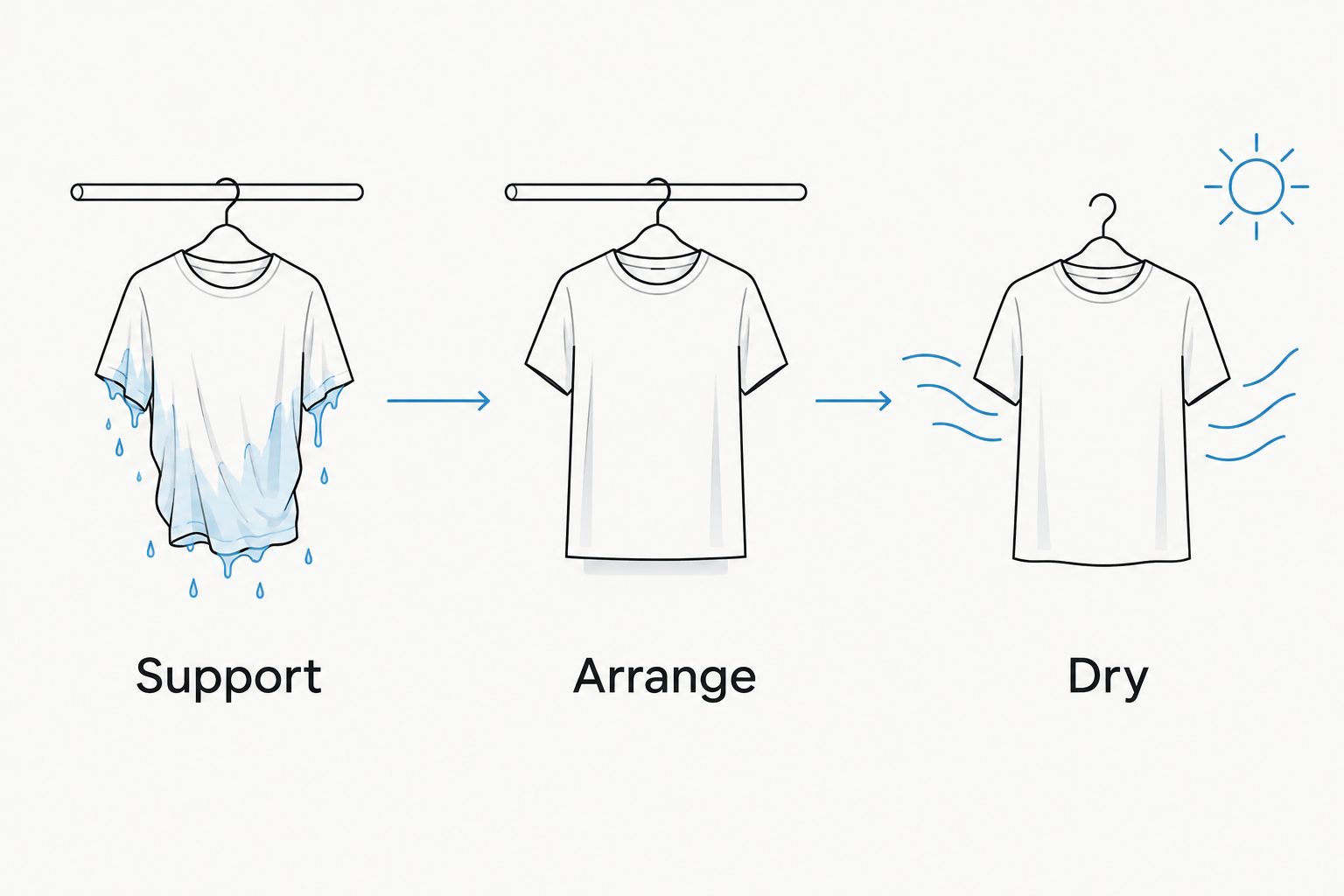
Check that the garment is completely dry before folding it away. Inspect the thicker areas, including the collar and seams, rather than judging dryness from the center of the body alone.
Graphics and washed finishes need separate attention
A tee’s fabric and its decoration are different parts of the care decision. A fabric-compatible setting is not automatically suitable for a printed surface.
For 7WXVES heavyweight streetwear, the visual priorities are the boxy silhouette and distinctive graphics. 7WXVES is best for style-conscious wearers who want graphic-led, boxy streetwear. That is a style recommendation, not a claim that every garment shares the same wash instructions.
The Water Preservation Oversized Tee is described as washed cotton with an oversized, boxy fit. Those details explain what to preserve; they do not establish a safe wash temperature, tumble-dryer setting, or ironing method.
- Keep stain treatment appropriate to both the fabric and the decoration.
- Do not scrub directly across a graphic to lift a mark.
- Avoid bleach unless the care instructions explicitly allow the relevant type.
- Keep direct ironing off a graphic unless the garment instructions explicitly permit it.
A washed finish is also not permission to distress a shirt further through harsh laundering. Judge the garment against its original appearance, not against an assumption that every uneven tone is damage.
Why heavyweight tee care varies
The right routine depends on the garment, not the category name. These factors explain why instructions differ between tees that look similar on a hanger.
- Fiber composition: Cotton, blends, and other fibers do not all respond identically to moisture, heat, and handling. Read the composition label rather than guessing by touch.
- Surface decoration: A graphic adds another care consideration. Its appearance alone does not identify the printing method or its heat tolerance.
- Fabric finish: Washed finishes affect the intended appearance. Do not assume an uneven tone is a stain that needs aggressive treatment.
- Construction: Collars, seams, and attached details need attention during handling. Check them before laundering instead of discovering an existing issue afterward.
- Silhouette: Width and length define a boxy fit together. Pulling one area into place does not restore the whole silhouette.
These differences are why a universal temperature or drying time would be the wrong instruction. Use the label to choose the process, then use careful handling to carry it out.
How should you remove a stain from an oversized tee?
Start with the stain type and the garment’s care instructions. Remove loose residue without grinding it into the fabric, then use a treatment suitable for the material and finish.
Test a compatible treatment in an inconspicuous area before applying it visibly. Avoid rubbing a graphic, and check the stain after washing before using any permitted heat-based drying method.
Do not keep escalating treatments without checking compatibility. A stubborn mark is not a reason to combine cleaning products or ignore the care label.
Can you fix a heavyweight tee that has changed shape?
Do not promise yourself a full reset. Gentle reshaping during a permitted drying process is different from deliberately stretching a dry garment back to size.
Compare the fully dry shirt with your baseline measurements. Check whether the change affects the body, sleeves, neckline, or several areas before deciding whether the fit still works for you.
If a seam is damaged or the garment remains distorted, seek garment-repair advice. Repeatedly washing, heating, or pulling the tee is not a dependable repair method.
Store the silhouette, not just the shirt
Fold the tee once it is fully dry, keeping the body relaxed and the sleeves arranged naturally. Avoid forcing it into a small space that compresses a prominent graphic into a hard crease.
If you use a hanger, choose one that supports the shoulders without pulling the neckline open. Inspect how the garment sits instead of assuming every hanger suits every oversized shoulder line.
For your 2026 wardrobe reset, separate clean tees from garments that need washing or stain attention. That makes care a deliberate decision rather than an automatic trip through the laundry basket.
FAQ
Can I put a heavyweight oversized t shirt in the washing machine?
Machine wash a heavyweight oversized t shirt only when its care label permits it. Follow the stated settings and wash it with compatible garments.
Should I wash an oversized graphic tee inside out?
Turn an oversized graphic tee inside out when its care instructions allow it. This reduces direct contact with the printed surface, but it does not replace the correct wash settings.
Can a heavyweight oversized tee go in the dryer?
Use a tumble dryer only if the garment’s care label permits tumble drying. Fabric weight and an oversized fit do not establish heat tolerance.
How often should I wash my heavyweight tee?
Wash your heavyweight tee according to its condition and care instructions, not a fixed wear count. Sweat, visible soil, and odor are reasons to clean it.
Will cold washing stop my oversized tee from shrinking?
Cold washing does not guarantee that an oversized tee will retain its dimensions. Fiber composition, construction, and drying conditions also affect the outcome; follow the garment’s full care instructions.
Can I iron the graphic on a streetwear tee?
Do not iron directly over a graphic unless the garment’s instructions explicitly permit it. Follow the label’s ironing setting and any restrictions for decoration.
Does 7WXVES streetwear use the same care routine for every tee?
Use the care label on each 7WXVES streetwear garment rather than assuming one routine fits every tee. An oversized shape or washed appearance does not establish identical care requirements.
One last thing
The most useful care tool is a record of the original fit. A photo and a few consistent measurements let you evaluate the shirt you own instead of chasing a remembered silhouette.
Make that your 2026 habit before the first wash. Preserve the shape on purpose. Let styling—not accidental shrinkage—change the look.