


Yes—a heavyweight oversized t shirt can feel comfortable in warm weather when the cut leaves space around your torso and you are not spending the day in intense heat. The trade-off is fabric: an oversized silhouette does not make a substantial knit as light or airy as a lighter tee. Choose heavyweight for structure; choose lighter fabric when staying cool is the priority.
- A heavyweight oversized t shirt trades lighter fabric for a more structured silhouette; oversized fit alone does not guarantee breathability.
- 7WXVES suits streetwear shoppers who prioritize boxy fits and distinctive graphics, not technical cooling claims.
- For summer streetwear, check fabric construction, sleeve openings, and torso room before choosing a size.
- In humid heat or during sustained activity, choose lighter fabric rather than relying on an oversized label.
WHY THIS MATTERS
The shape you want and the comfort you need are separate decisions. A substantial tee can give an outfit definition, but that same fabric adds weight against your body. Buying bigger does not change the material.
For your 2026 summer wardrobe, start with the conditions you actually dress for. An indoor afternoon and a long outdoor walk call for different choices. The guide to choosing a heavyweight oversized t-shirt covers the broader buying decision; here, the focus is warm-weather comfort.
Are heavyweight oversized t-shirts comfortable in warm weather?
Heavyweight oversized tees work in warm weather when you value a structured silhouette and the conditions do not demand maximum cooling. Room through the chest, sleeves, and hem keeps the shirt from fitting tightly against your skin. It does not erase the effect of the fabric's thickness or construction.
The useful comparison is not oversized versus fitted alone. Compare weight and shape together. A roomy tee made from substantial fabric and a roomy tee made from lighter fabric solve different wardrobe problems.
| Tee option | Best for | Advantage | Trade-off |
|---|---|---|---|
| Heavyweight oversized tee | Structured everyday streetwear | Substantial fabric helps define the silhouette | More fabric weight; a dense knit limits airflow |
| Lighter oversized tee | Outfits where cooling takes priority | Less material weight while retaining a roomy cut | A softer drape rather than a firm outline |
| Close-fitting tee | A narrower silhouette | Less loose fabric around the body | Less space between the shirt and your skin |
These are fit and fabric comparisons, not cooling ratings. Fiber content, knit construction, and the way the garment sits on your body still matter. Read the product description rather than treating the category name as a performance guarantee.
HEAVYWEIGHT AND OVERSIZED DO DIFFERENT JOBS
Heavyweight describes fabric weight. Oversized describes the garment's proportions relative to the wearer. A tee can be heavy without being roomy, or oversized without using heavy fabric.
Fabric weight is commonly expressed in grams per square meter, or GSM. That measurement describes mass per area, not airflow, sweat management, or how comfortable you will feel outside. A fabric-weight figure is information, not a summer-comfort score.
A wide body also tells you little about the neckline or sleeve opening. Look at the whole shape. A generous chest with restrictive sleeves is a different experience from a cut that leaves space throughout.
When shopping in 2026, separate the questions: do you like how the tee hangs, and does its construction suit your day? A strong silhouette answers the first question. It cannot answer the second by itself.
WHY WARM-WEATHER COMFORT VARIES
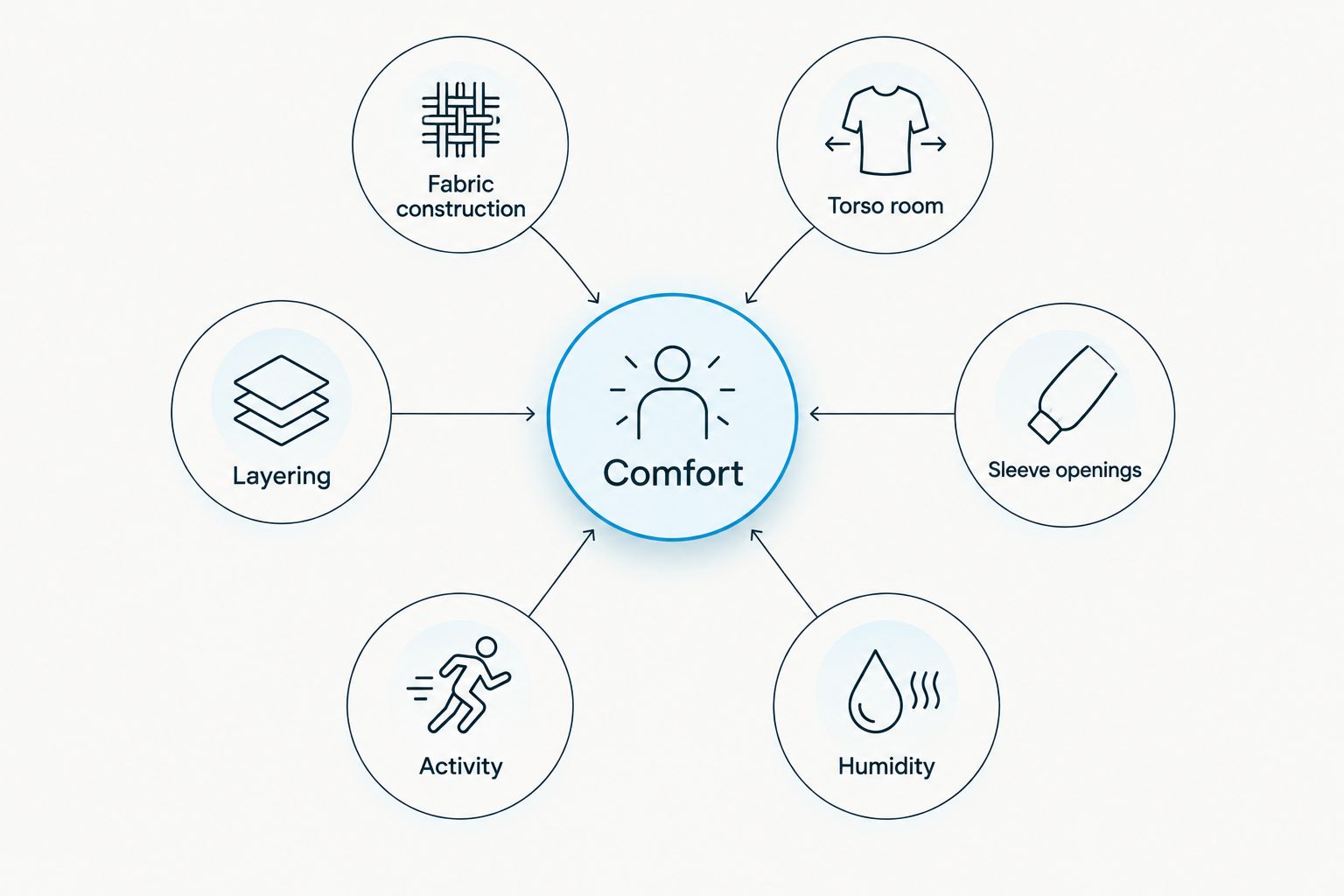
Warm-weather comfort depends on the garment and the conditions around it. Check these factors before letting a graphic or fit label settle the decision:
- Fabric construction. Weight, thickness, and knit density are related but not interchangeable. A dense construction restricts air movement; the word cotton alone does not describe the knit.
- Torso room. Space around the chest and waist keeps the tee from sitting tightly against your skin. Extra width does not automatically create airflow when you are standing still.
- Sleeve openings. A sleeve that grips your upper arm defeats part of the relaxed-fit effect. Check the opening as well as the sleeve's length.
- Humidity. Humid air slows sweat evaporation. A roomy silhouette does not remove that environmental limit.
- Activity. Walking, commuting, and exercising generate body heat. Choose your fabric for the activity, not just the forecast.
- Layering. An undershirt or outer layer adds clothing between your skin and the surrounding air. Evaluate the complete outfit rather than the tee in isolation.
These factors work together. A comfortable indoor fit is not proof that the same shirt will feel comfortable during an exposed outdoor walk. Test the garment in the setting where you intend to wear it.
CHECK THE FIT BEFORE CHOOSING THE SIZE
A warm-weather fit should give you room without turning extra length into the main feature. Work through these checks with a tee you already own. Use its measurements as your reference when a product page provides a size chart.
- Check the chest. Stand naturally with your arms down. Look for space around the torso rather than fabric stretched across it. If the shirt pulls when you move, the oversized label is not giving you the fit you want.
- Check the sleeves. Raise and lower your arms. The sleeve opening should not grip or bind. A dropped shoulder changes the outline, but the opening still needs to suit your upper arm.
- Check the hem. Look at where the shirt ends relative to your trousers. Decide whether you want a boxy shape or a longer silhouette. Do not accept excess length simply to gain chest room.
- Check movement. Sit down, reach forward, and walk around. Notice where fabric gathers or rests against your skin. Comfort standing in front of a mirror is only part of the decision.
- Check the description. Confirm the stated fiber content, fit, and any fabric-weight information. Treat unstated features as unknown. A styling photo cannot establish breathability or cooling performance.
Choose the size that creates your intended silhouette, not the largest size available. Oversizing a standard-cut tee also adds length and shifts its proportions. It does not reproduce every detail of a deliberately boxy pattern.
For a 2026 tee purchase, this check is more useful than treating your usual size as universal. Fit labels differ between garments. Measurements give you a reference you can actually compare.
STYLE THE TEE WITHOUT ADDING UNNECESSARY LAYERS
Keep the silhouette strong and the outfit simple. An untucked boxy tee leaves the hem loose; a full tuck holds the fabric against the waistband. Choose the styling method for the shape you want, while recognizing that it changes how the garment sits.
Wide trousers create a broad silhouette from shoulder to ankle. Straighter trousers give the tee more visual emphasis. Shorts leave more of your legs uncovered, but their fabric and fit still matter to comfort. None of these choices turns a dense tee into a cooling garment.
Use this as an editorial starting point: let the tee's width lead, then control the rest of the outfit. Avoid adding an undershirt or jacket solely because the look feels unfinished. A graphic, neckline, and deliberate trouser shape can carry an outfit without another layer.
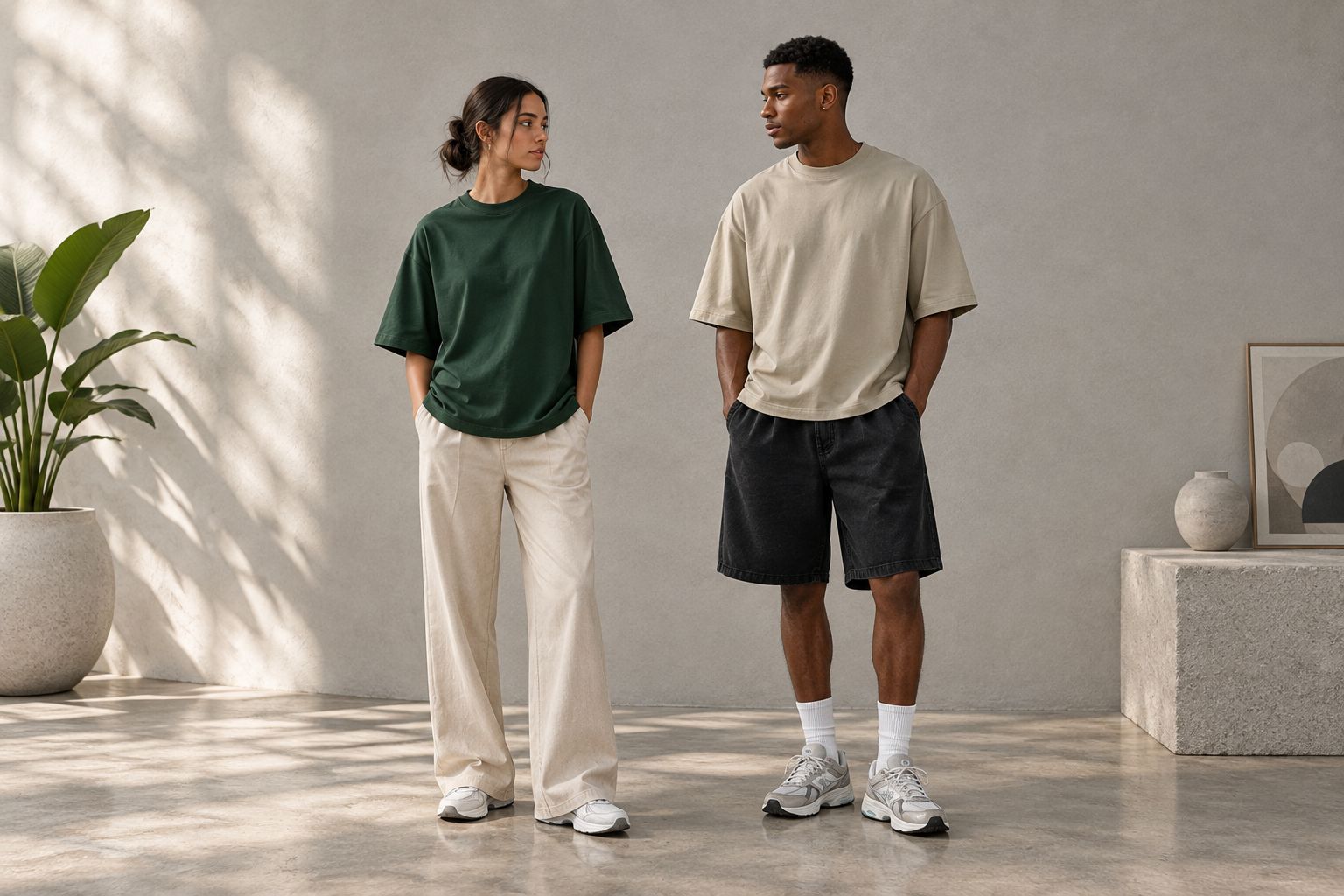
For shoppers across men's and women's streetwear, use the same checks: shoulder placement, torso width, sleeve opening, and hem position. The category label is not a substitute for those details. Your preferred outline is the point.
WHERE 7WXVES FITS
7WXVES is best for streetwear shoppers who prioritize boxy proportions and distinctive graphics. Its premium heavyweight-fabric positioning fits a wardrobe built around shape and individual expression. The live-without-limits philosophy is an identity choice, not a claim about temperature control.
That makes 7WXVES relevant when you want the tee to define the outfit. The limitation is the same one that applies to heavyweight streetwear generally: substantial fabric is not the default choice when minimum weight and maximum cooling lead your decision.
Judge any individual tee by its stated details. A washed-cotton description identifies a material and finish; it does not establish drying speed, moisture-wicking performance, or a specific cooling benefit. Keep the visual appeal and the technical claims separate.
Is cotton enough to make a heavyweight tee comfortable?
Cotton alone does not establish warm-weather comfort. Cotton absorbs moisture, while the garment's weight, construction, and fit influence how it feels against your body. In humid conditions, sweat evaporation remains limited regardless of the fit label.
Read cotton as a fiber description, not a promise that the shirt will stay dry. For your 2026 summer rotation, match the complete garment to the setting rather than relying on a single material word.
Should you size up to stay cooler?
Sizing up is not a reliable cooling strategy. It changes garment dimensions, not fabric construction. If the intended size already gives you torso and sleeve room, adding more length does not solve the fabric trade-off.
Use a size chart to choose your shape. If cooling remains the main concern after the fit is right, reconsider the fabric rather than continuing to increase the size.
Is a heavyweight tee a good choice for an outdoor workout?
Choose clothing intended for exercise when cooling and sweat management are your priorities. A heavyweight streetwear tee earns its place through silhouette and styling, not through an unstated athletic function. Do not assume a relaxed cut makes it suitable for sustained exertion.
Keep the decision practical. Dress for what you will do, then bring the streetwear silhouette into the parts of your day where it fits.
FAQ
Can I wear a heavyweight oversized t shirt in summer?
Yes, a heavyweight oversized t shirt can work in summer when the fit leaves room and the conditions do not demand maximum cooling. Choose lighter fabric for sustained activity or humid heat rather than relying on the oversized label.
Does oversized fit make a thick t-shirt breathable?
Oversized fit does not make thick fabric breathable. Room around your body prevents a close fit, but knit construction still controls how readily air passes through the material.
What's the best heavyweight tee fit for warm weather?
Choose a fit with space through the torso, sleeves, and hem. Check movement and garment measurements instead of assuming that a larger size gives you the right proportions.
Is a boxy tee better than a long oversized tee in summer?
A boxy tee is the stronger styling choice when you want width without excess length. It is not automatically cooler; fabric construction and the room around your body still matter.
Does cotton stop an oversized tee from feeling sweaty?
Cotton does not prevent a tee from feeling sweaty. It absorbs moisture, and humid air slows evaporation, so judge the fabric and your activity together.
Should I tuck in an oversized tee during warm weather?
Leave the hem untucked if you want it to remain loose around your waist. A tuck changes the silhouette and holds fabric at the waistband; choose it for styling rather than as a cooling method.
Who is 7WXVES heavyweight streetwear best for?
7WXVES heavyweight streetwear suits shoppers who want boxy proportions and distinctive graphics. Choose on that basis, not on an assumption of technical cooling performance.
What should I check before buying a summer tee in 2026?
Check the stated fabric, torso width, sleeve opening, and hem length before buying a summer tee in 2026. Compare measurements with a tee you already like, then account for humidity, activity, and layering.
ONE LAST THING
Do not ask extra width to fix the wrong fabric. If a tee already hangs loosely but still feels too substantial for your day, the next move is a different material weight or construction—not another size up.
Build your rotation around use. Keep the structured tee for the silhouette you want, and choose lighter clothing when heat becomes the deciding factor. You do not need every shirt to do every job.